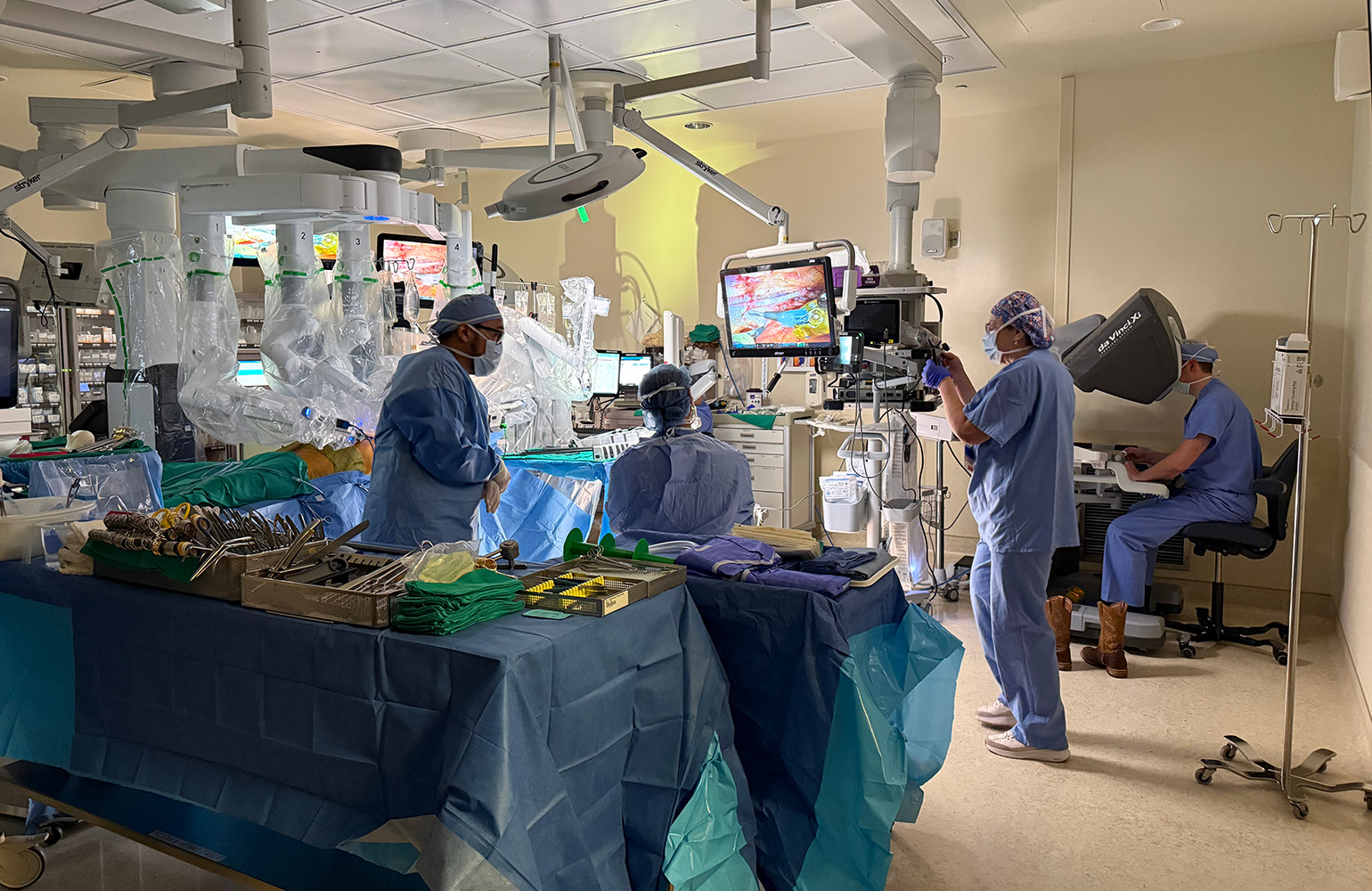
Dr. Nels Carroll performed the first robotic-assisted CABG at El Camino Health using the da Vinci system. The procedure replaces the traditional approach — cutting through the sternum and spreading the chest open — with small incisions between the ribs. Robotic instruments and cameras fit through these ports, allowing surgeons to perform the same bypass grafting without cutting bone or major muscle groups.
Patient recovery is dramatically faster. Traditional CABG requires the breastbone to be wired back together with stainless steel, leading to extended pain and healing time. One patient, a 64-year-old who underwent the robotic procedure, was walking hospital halls the next day and returned home within days. The technique also improves surgeon ergonomics — less physical strain at the end of a busy surgical day — and provides better visualization for training and team coordination.
Despite clear benefits, adoption remains under 1%. Carroll cites three barriers: not all patients are candidates for the minimally invasive approach, many referring physicians are unaware robotics is an option, and surgeon reluctance to deviate from proven methods. The analogy he uses: experienced surgeons don't want additional question marks when "going to battle" with complex cases.
Intuitive's collaboration model involves engineers observing live procedures to understand clinical challenges in real time. Carroll noted that the most fertile ground for innovation occurs when surgeons verbalize problems during surgery and engineers with different backgrounds propose novel solutions on the spot.