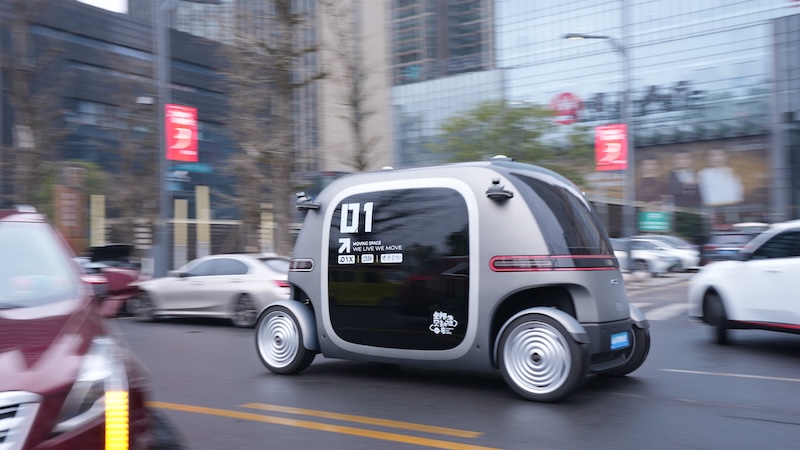
PIX Moving unveiled six partnerships at the Paris Motor Show targeting autonomous shuttle services, last-mile logistics, and workforce development across four countries. The deals pair PIX's modular vehicle architecture with operators including One-Board (France), Comobi (Belgium), CaiiTech (Germany), and a tripartite agreement with UMPSA and Move Robotic (Malaysia). A French autonomous mobility operator and NIT Institute round out the network.
The partnerships follow a consistent pattern: PIX provides the vehicle platform and manufacturing capability, while local partners handle regulatory preparation, service design, and market entry. CaiiTech will localize PIX's RoboBus for European certification. Move Robotic and UMPSA will conduct pilot deployments across Malaysian campuses and tourism sites. One-Board will explore last-mile logistics applications in France.
PIX's approach reflects a broader industry shift away from the robotaxi model toward specialized urban services. The company positions its platform as "city robotics" — modular vehicles that can be adapted for employee shuttles, campus mobility, tourism, and public transit depending on local demand. This requires deep integration with regional operators who understand municipal procurement, labor dynamics, and infrastructure constraints.
The model distributes commercialization risk across multiple partners but raises questions about platform fragmentation. If each regional operator customizes the base vehicle significantly, PIX may struggle to maintain manufacturing economies of scale or cross-market software improvements. Success depends on how much standardization PIX can enforce while still allowing local adaptation.