Einride's contracted annual recurring revenue grew from $95M in June to $167M in November 2026, driven by eight new customers and expanding freight volumes across its 40+ customer base. The company added nearly 3,100 cumulative driverless operating hours under customer contracts in the quarter, reaching 8,500 total hours. Q3 revenue hit $18.3M, up 27% sequentially on constant currency basis.
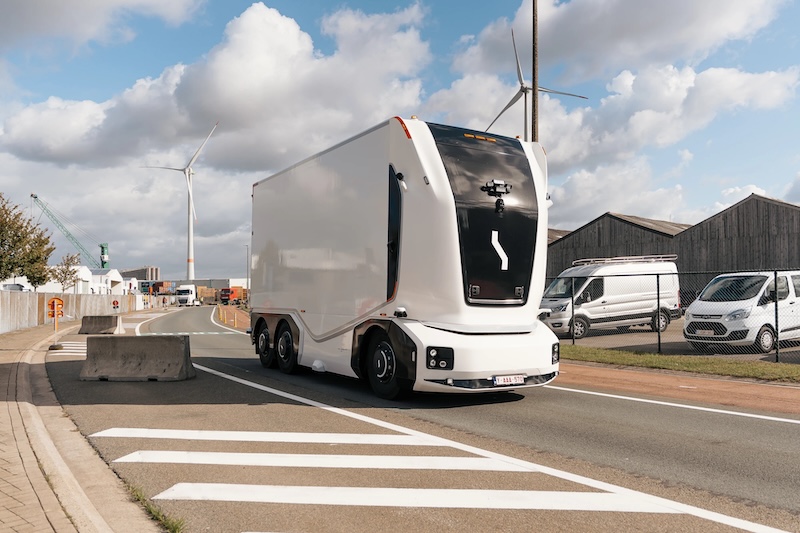
The operational expansion is notable for regulatory and technical milestones. In September, Einride deployed a cabless SAE Level 4 autonomous truck with Lidl in Germany under a permit from the Federal Motor Transport Authority — the first such vehicle in daily service on German public roads with no driver or safety operator onboard. A parallel deployment in Marysville, Ohio with EASE Logistics introduced two cabless autonomous electric trucks. Einride now has permits to operate without safety drivers in four countries and five US states.
The company is scaling aggressively. It plans to deploy most of its 500 Tesla Semi order in 2027, expanding from the current 260 electric trucks and 10 autonomous vehicles. Fleet financing will come primarily from asset-backed arrangements to preserve capital for technology development. Einride is collaborating with Nvidia on its next-generation Einride Driver autonomous system using the Hyperion platform and plans to evaluate Nvidia's Alpamayo vision-language-action model for highway autonomous operations starting in H1 2028.
Cash burn remains high. Adjusted EBITDA was negative $20.3M in Q3, and the company revised its H2 2026 outlook to a loss of $39M-$41M. Cash position dropped from $74M to $53M quarter-over-quarter. Einride targets cash flow breakeven in 2028 with 1,500-2,000 vehicles in operation and projects autonomous vehicles will deliver a 25-30% TCO advantage over diesel once they represent half the fleet.
The company's 2030 target of $2B in annualized revenue depends on licensing its Saga AI freight management platform and Einride Driver technology to vehicle manufacturers and freight operators — a strategy that remains unproven at scale. Over 65% of its 2027 $250M revenue target is already contracted, suggesting near-term visibility is solid, but the path to profitability hinges on fleet utilization rates and the timeline for highway autonomous deployment.