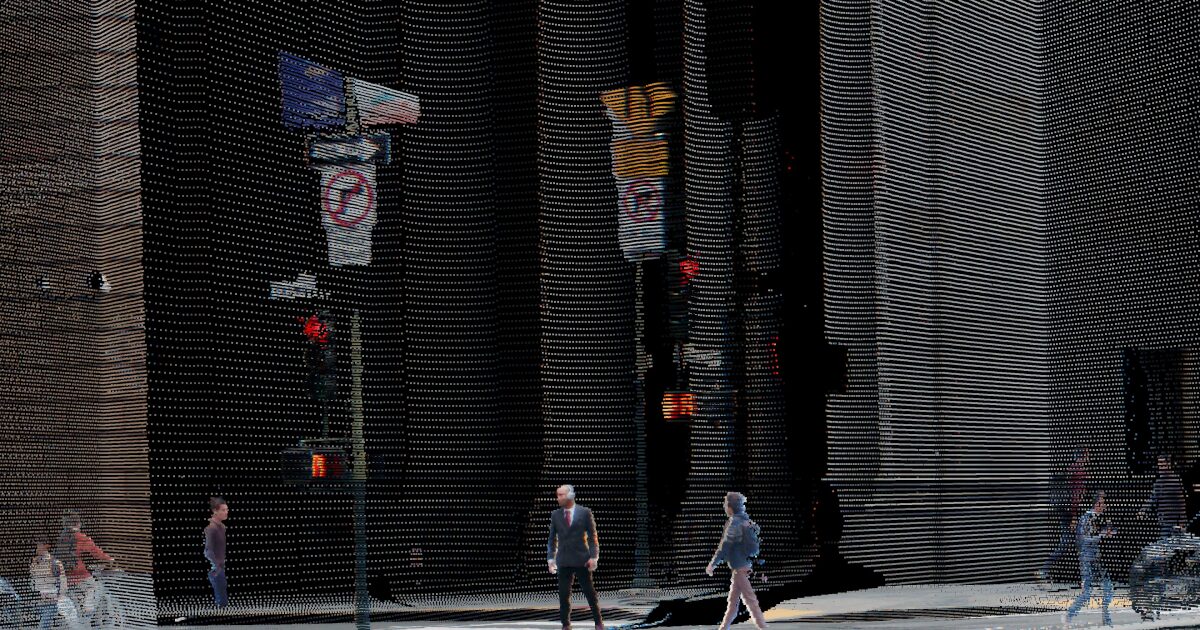
Ouster's Rev8 eliminates the two-step sensor fusion architecture that has dominated autonomous perception. Traditional systems pair LiDAR for geometry with cameras for color, then stitch the data together via software—a process that introduces calibration errors and latency. Rev8 embeds color directly into each captured point using Ouster's new L4 chip, co-developed with Fujifilm, which processes 20 trillion photons per second at 40 kHz.
The flagship OS1 Max delivers 256-channel resolution with a 500-meter range under optimal conditions and 200 meters at 10% reflectivity. It operates across lighting conditions from 1 lux (near-darkness) to 2 million lux (direct sunlight) with 48-bit color depth and 116 dB dynamic range. This means a single sensor can now read traffic signs, detect brake lights by color, and generate topographic maps with real-world color data—without additional hardware.
The launch follows Ouster's February 2025 acquisition of StereoLabs for $38 million, signaling a shift from selling standalone sensors to offering a full perception platform. Early adopters include Google, Volvo Autonomous Solutions, Skydio, PlusAI, and Seegrid. Hesai Group announced a competing full-color platform (6D ETX) weeks earlier, but takes a different approach by capturing six data dimensions including velocity.
Native color fusion simplifies AI model training by delivering cleaner, pre-aligned data. For operators, this reduces system complexity and calibration overhead, but introduces new vendor lock-in dynamics as perception stack and hardware become tightly coupled.