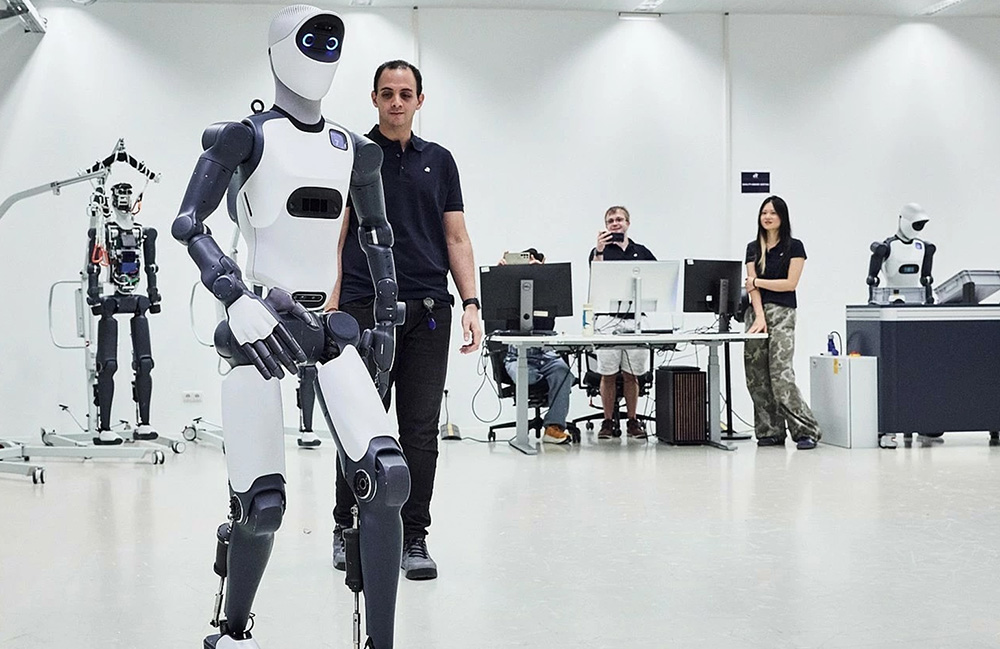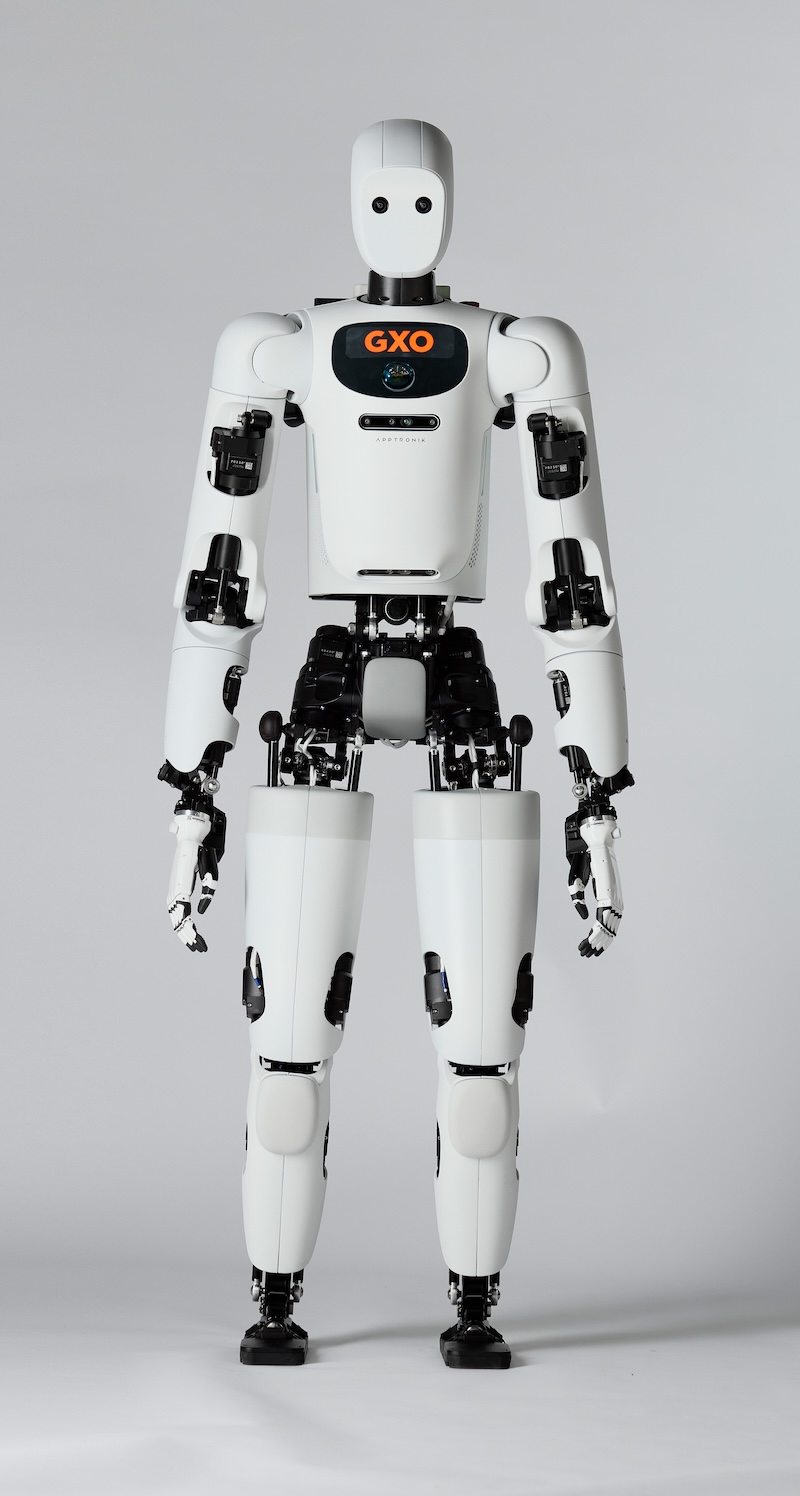
GXO Logistics and Apptronik have signed an expanded agreement to deploy up to 1,000 Apollo humanoid robots over four years, beginning with trials in late 2027. The partnership builds on a 2024 proof-of-concept that tested Apollo in autonomous picking for small consumer goods. Trials will now expand to goods-to-person and person-to-goods picking, case and tote movement, packing, and sortation.
Apollo is designed for repetitive, physically demanding warehouse tasks — tote handling, light picking, sortation. The robot's dexterity and form factor allow it to work in spaces designed for human workers without facility reconfiguration. Apptronik and GXO have tested over 50 logistics tasks at Apptronik's Robot Park training facility, refining the system's ability to operate alongside existing automation and human teams.
The deployment is structured as Robotics-as-a-Service, allowing GXO to scale humanoid capacity without large capital outlays. Rollout is contingent on the robots hitting agreed productivity, safety, and operational KPIs in live trials. This performance gating is critical — it reflects industry caution around humanoid reliability in real-world logistics environments, where uptime and throughput directly impact customer SLAs.
If GXO hits its 1,000-unit target, it would represent one of the largest humanoid deployments in commercial logistics. The move positions GXO as a first-mover in bipedal warehouse automation, but also exposes the company to vendor lock-in risk if Apptronik's platform becomes a critical dependency across its network. Competitors including Amazon (Agility Robotics' Digit), DHL, and third-party logistics providers are running parallel humanoid trials, creating a near-term race to prove unit economics at scale.