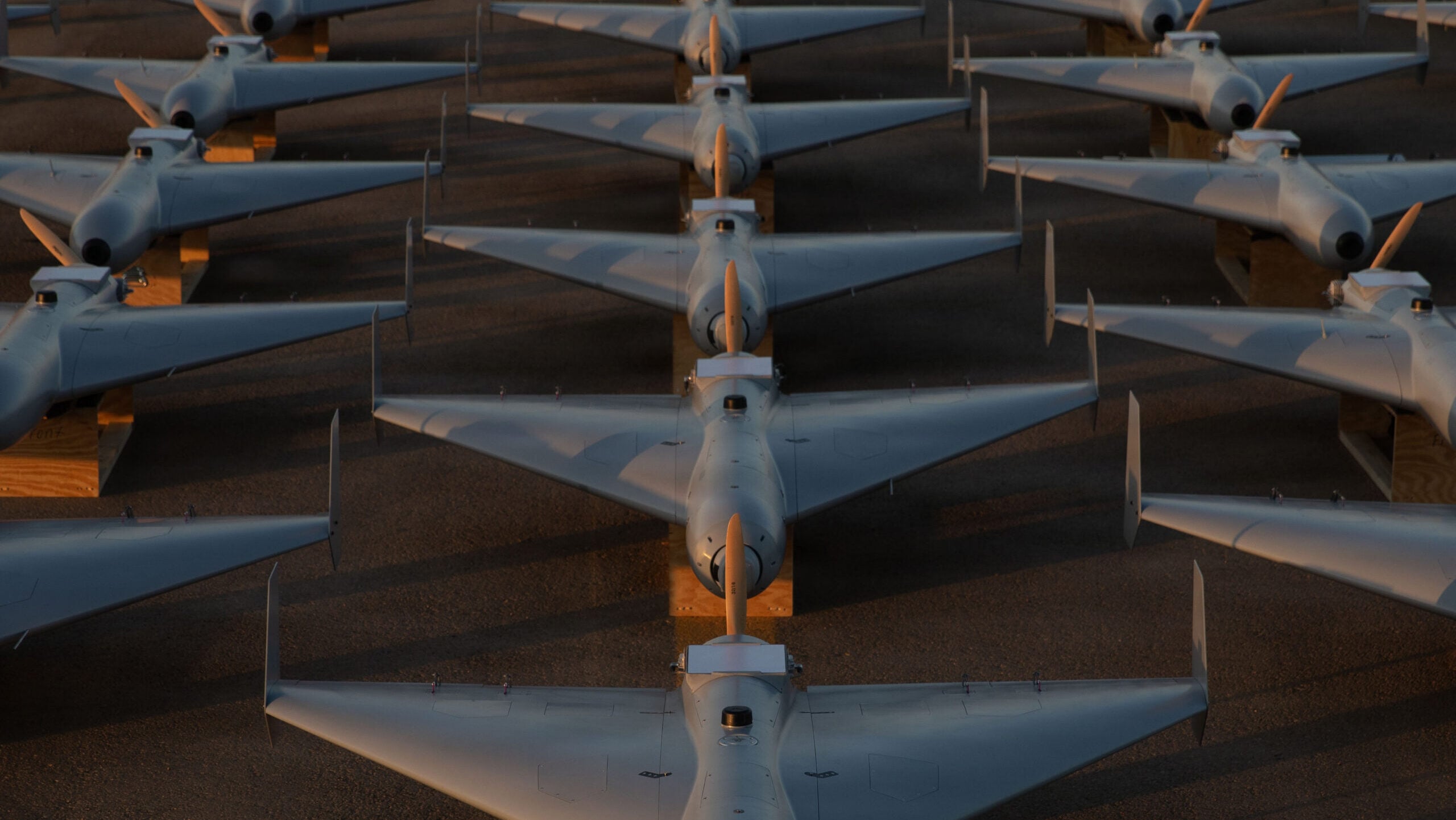
Shield AI announced a Pentagon contract to integrate Hivemind autonomy software onto the Low-Cost Uncrewed Combat Attack System (LUCAS), a reverse-engineered Iranian Shahed 136 clone with a $35,000 unit cost. The pilot program will enable drone swarms to coordinate, maneuver, and adapt autonomously while a single operator retains authority over strike decisions.
Hivemind allows multiple LUCAS platforms to operate independently without continuous human input or reliable communications — a critical capability in GPS-denied or jammed environments. Shield AI claims this "shortens the time from detection to action across the kill chain" and expects an operational demonstration this fall.
The effort sits within the Defense Autonomous Warfare Group (DAWG), which absorbed the Biden administration's Replicator program and now commands nearly $55B in FY27 funding for drone and autonomy development. DAWG's mandate is to accelerate collaborative autonomy fielding across platforms, with particular focus on the Pacific theater.
LUCAS was first confirmed in use during recent strikes on Iran. The 10-foot airframe carries an explosive payload and detonates on impact. Integrating swarm autonomy onto a platform already in operational use represents a faster path to fielding than developing new systems from scratch — a core tenet of the Drone Dominance strategy.
The program raises questions about human-machine teaming doctrine and rules of engagement. While Shield AI emphasizes that humans retain strike authority, the degree of autonomy in target selection, route planning, and coordinated maneuvers remains undefined. Operators and mission planners will need clear protocols on when and how swarms hand off decision authority.