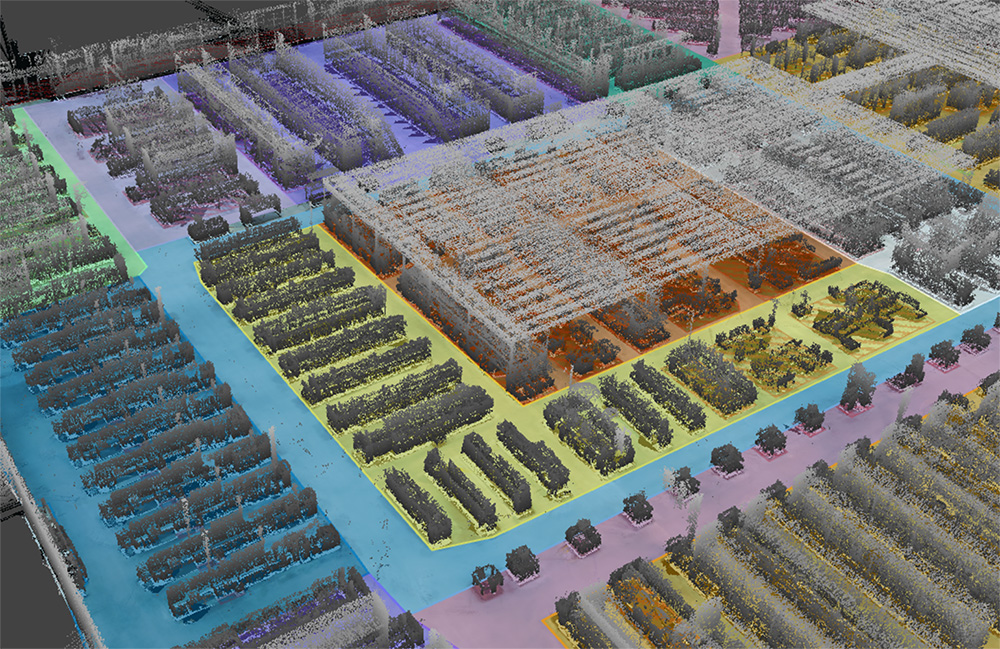
Brain Corp and UC San Diego announced an expanded research collaboration focused on what they call a "contextual grounding layer" — an intelligent digital representation of physical spaces that gives robots situational awareness to understand and respond to their surroundings. The work is led by Dr. Nikolay Atanasov, head of UC San Diego's Existential Robotics Laboratory, in partnership with Brain Corp's engineering teams.
The collaboration addresses a fundamental limitation in current AI-powered robotics: while vision-language-action models and generative AI can process visual data, they lack robust spatial understanding needed for safe operation in complex environments. The teams are building semantic mapping infrastructure that integrates into Brain Corp's BrainOS platform, which currently powers over 50,000 deployed AMRs globally with 25 million operational hours logged.
The target is not individual robot tasks but fleet-scale orchestration across entire facilities. Brain Corp positions this as infrastructure for coordinating autonomous systems, fixed sensors, and AI agents at enterprise scale — moving beyond task automation to ambient intelligence across commercial operations.
The collaboration leverages Brain Corp's operational dataset from real-world deployments to validate how contextual mapping improves robot resilience and adaptability under changing conditions. The company's CTO John Black will present deployment insights at the 2026 Robotics Summit & Expo in Boston next week.