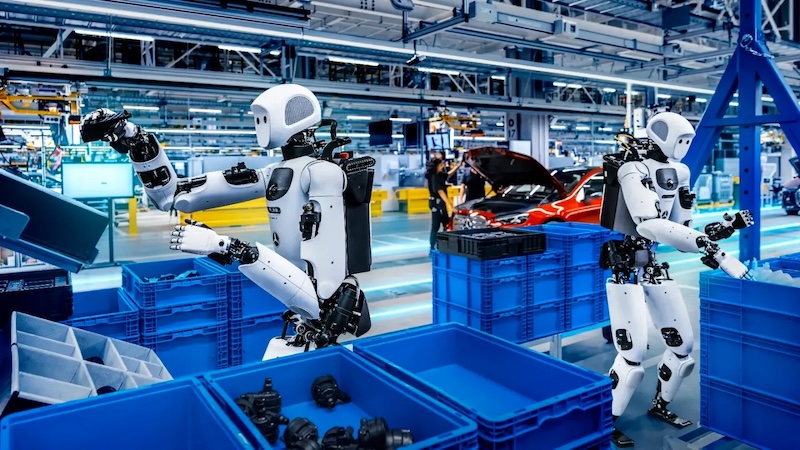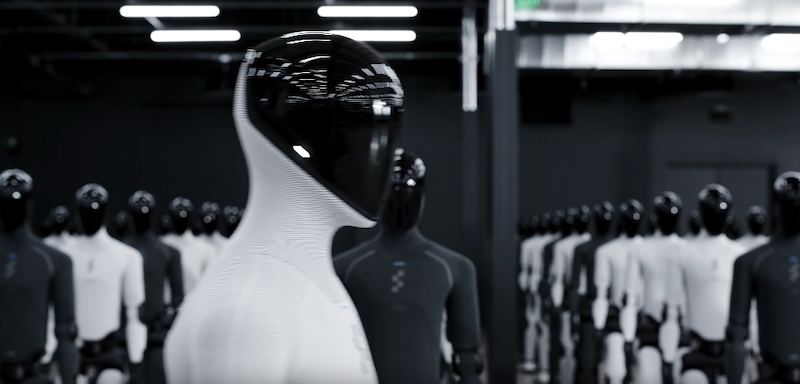
Figure AI claims its BotQ facility achieved a 24-fold increase in Figure 03 humanoid production throughput in under 120 days, moving from one robot per day to one per hour. The company has manufactured over 350 third-generation units and produced more than 9,000 actuators across 10+ SKUs.
The production system incorporates custom manufacturing execution software across 150+ networked workstations, with over 50 in-process inspection points and 80+ end-of-line functional tests. Battery production has reached 99.3% first-pass yield; overall robot first-pass yield exceeds 80% and is improving weekly. Robots undergo stress testing including thousands of cycles of squats, jogging, and shoulder presses to simulate long-term field use.
Manufacturing scale enables a feedback loop similar to autonomous vehicle fleets: more deployed robots generate operational data, which improves AI models, which enables broader deployment, which generates more data. Figure explicitly framed the production ramp as a development velocity milestone, not just a manufacturing one. The company has built fleet management systems, OTA update infrastructure, and failure diagnostics to operate humanoids as distributed AI platforms rather than standalone machines.
Figure's Helix AI now integrates visual perception and proprioceptive data for autonomous stair navigation, trained end-to-end in simulation and deployed directly to hardware without real-world fine-tuning. If sim-to-real transfer proves reliable at scale, it could dramatically accelerate behavior development across the sector.
The humanoid sector is entering a phase where competitive advantage depends less on impressive demos and more on manufacturing throughput, operational reliability, AI infrastructure, and fleet orchestration. Figure is positioning itself as the scaled operator in a market still dominated by R&D-stage players.