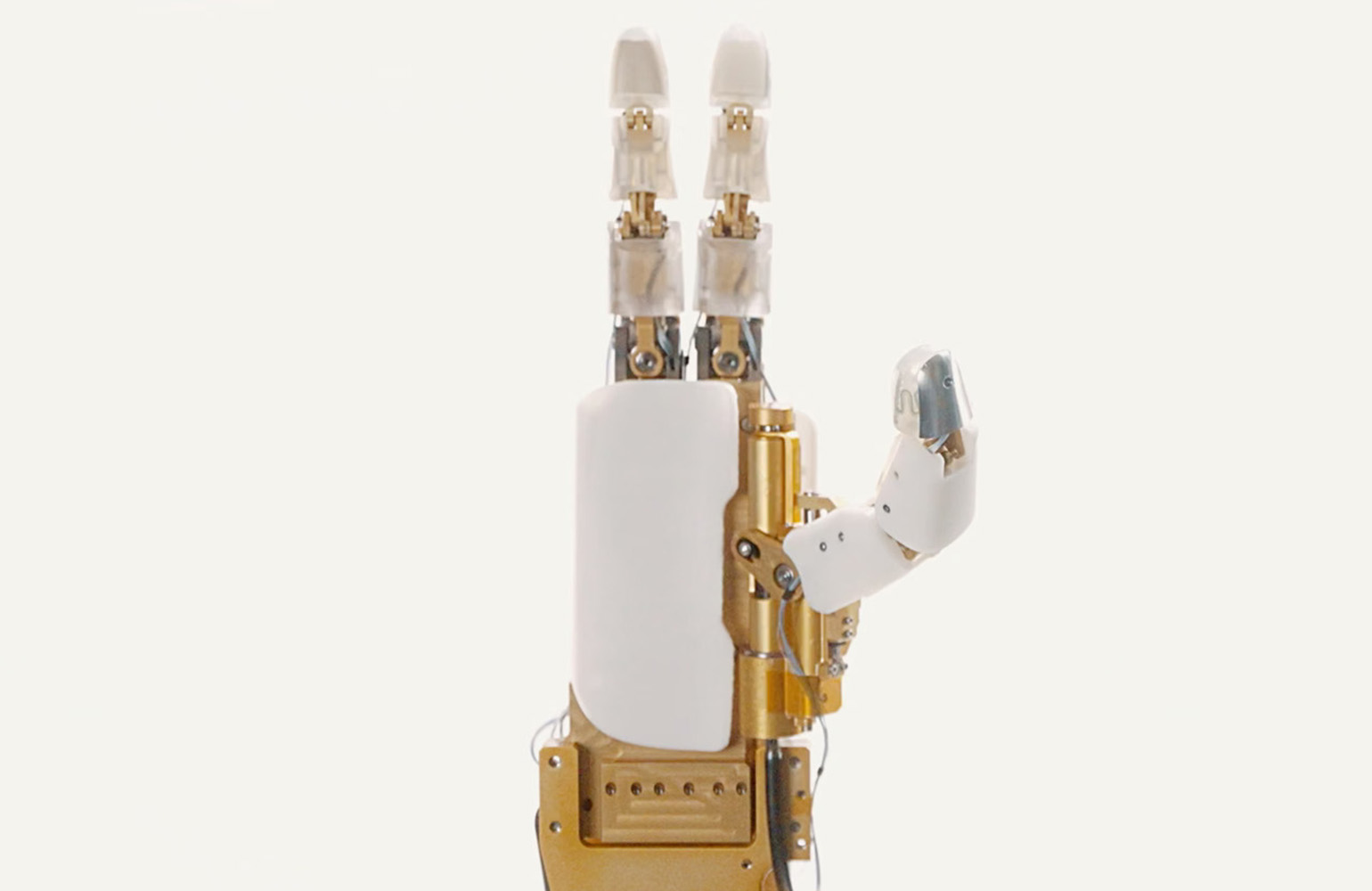
Tacta Systems launched TactaBot, a three-component system: the Tacta Hand (a five-finger gripper with 15 degrees of freedom), the Skill Capture glove worn by human workers, and a Dexterous Intelligence AI model. The hand uses fluidic tendon actuation — cables with moving fluids driving pistons — to keep fingers thin and heat-free while achieving up to 30 million cycle lifetimes. Each fingertip can exert 25 newtons of force and houses replaceable tactile sensors that measure force from 250 to 700,000 pascals and temperature to 0.1°C precision.
The Tacta Glove addresses the Physical AI data problem. Workers wear gloves embedded with 256 tactile sensors per fingertip while performing complex tasks. The system captures force, motion, video, and temperature data wirelessly and streams it to build robot training datasets. Tacta uses this data to fine-tune pre-trained AI models for specific customer operations, significantly reducing deployment time compared to from-scratch training.
The company is targeting electronics manufacturing and reshoring use cases. CEO Vikram Pavate noted that skilled labor shortages in manufacturing — particularly in high-value assembly work — represent the core opportunity. Tacta expects to ship its first TactaBots in early 2027, with potential long-term expansion into healthcare and food preparation.
The approach positions Tacta in a crowded field of dexterous manipulation startups. The replaceable fingertip design suggests Tacta expects wear and consumable revenue, not just hardware sales. Buyers should assess total cost of ownership, including sensor replacement cycles and dataset licensing terms.