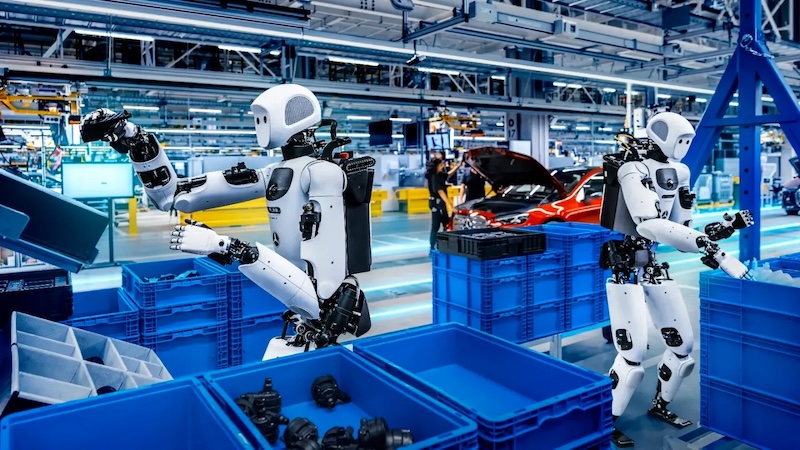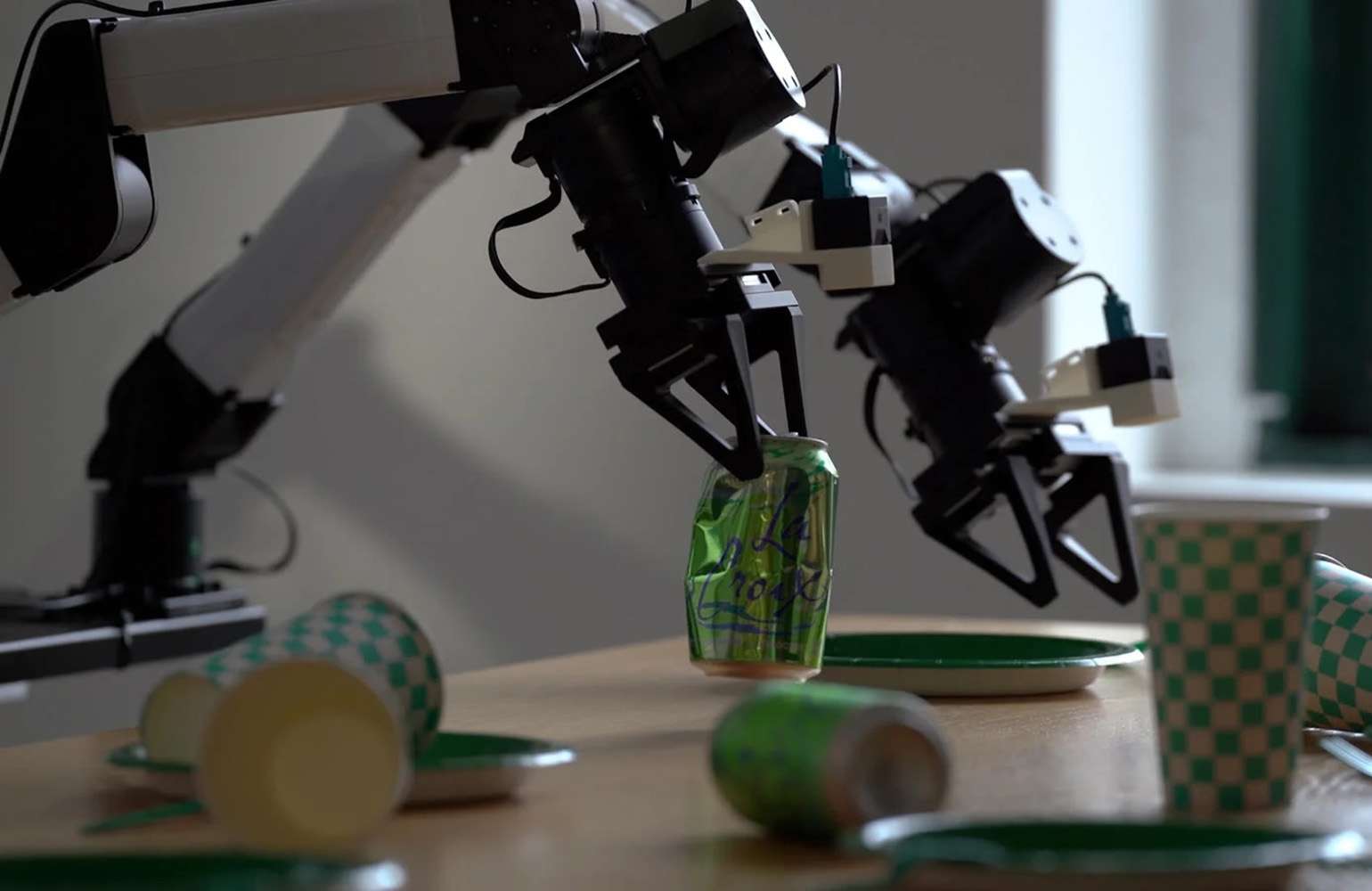
Runway AI introduced Praxis-1, a world action model built on the same large-scale video pretraining that powers the company's generative video systems. The model learns object behavior and task dynamics from third-person video rather than requiring extensive robot teleoperation data. Early testing with partners including Noble Machines, Standard Bots, and Ultra shows a single model can adapt across different robot embodiments with light fine-tuning.
The technical advantage is data leverage. Robot demonstration data is scarce and expensive to collect, while internet video is abundant. Runway claims Praxis-1 simulations inside its world model predict real-world robot performance with 0.95 correlation — comparable to 3D reconstruction techniques but at lower cost. Performance scales with video exposure, not robot hours.
The model handles tasks from pick-and-place to deformable object manipulation. Runway plans to release it with open weights rather than as a closed API, citing U.S. manufacturing competitiveness and the need for hardware developers to maintain control over their robotics stacks. General availability is targeted for the coming months.
The open-weight approach is a strategic move in the Physical AI foundation model race. If video-pretrained policies prove robust across embodiments, hardware makers could bypass proprietary training pipelines and ship faster. Runway is betting that generalist models trained on passive observation will outperform specialist models trained on active demonstration — a claim that will face real-world testing as deployment scales.