Aigen's Alchemy simulation platform generates pixel-level annotated training data that allows its Element robots to learn new crops before field deployment. The company recently trained Element to work with lettuce in simulation and deployed it in under a week—a significant acceleration over traditional adaptation cycles that typically require extensive field testing.
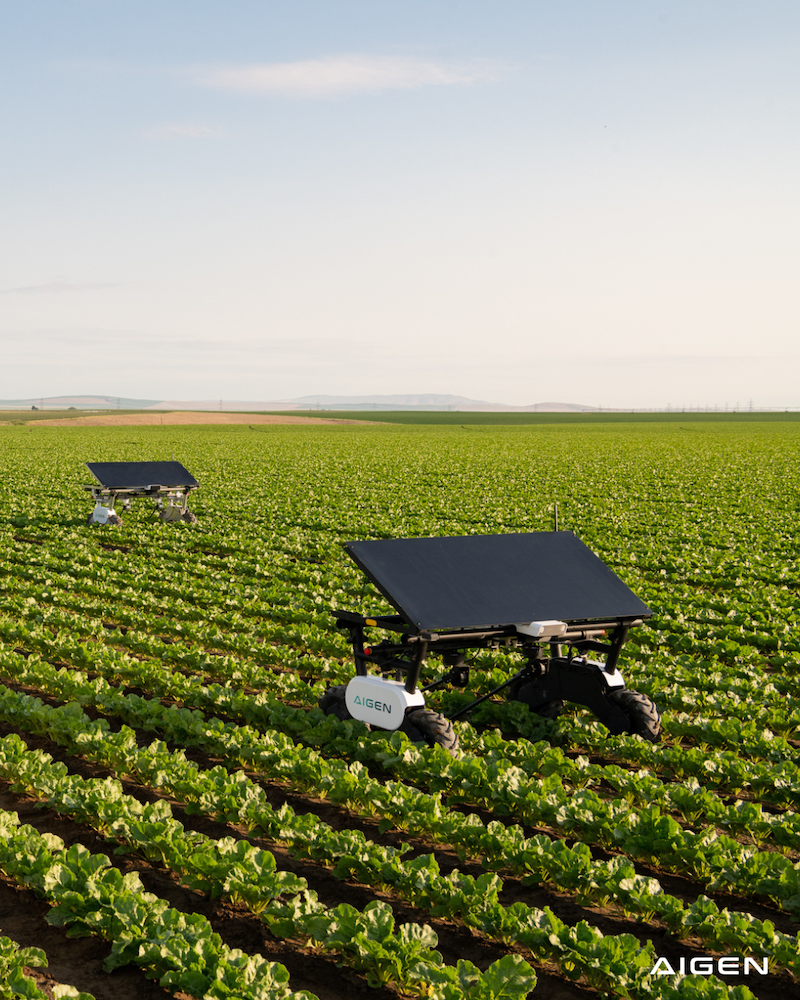
Element operates autonomously using onboard AI and computer vision to distinguish crops from weeds. Independently controlled robotic arms mechanically remove weeds at the root without herbicides, handling foliage up to six inches in diameter. The robots run entirely on solar power with battery backup, eliminating diesel dependency and operating costs tied to fuel price volatility.
Aigen has deployed over 100 robots across California, Minnesota, and North Dakota, accumulating 15,000+ autonomous operating hours on crops including soybeans, tomatoes, sugarbeets, lettuce, and cotton. Fortune 500 companies are using the Gen 2 X4 model for weed control and agricultural data collection. The platform also monitors crop health, counts plants, and identifies disease and fungal infections.
The simulation-to-field workflow addresses a key barrier in agricultural robotics: the time and cost required to adapt systems to different crops and growing conditions. By generating synthetic datasets on demand, Aigen can scale across crop types faster than competitors relying solely on real-world data collection. This positions the company to expand market share as growers seek alternatives to herbicide-based weed control and unpredictable diesel costs.