AWS launched the Physical AI Toolchain to bridge the gap between trained AI models and robots operating in unstructured environments. The platform integrates five development stages: synthetic data generation, model training via Amazon SageMaker, simulation and validation using NVIDIA Isaac tools, edge deployment through AWS IoT Greengrass, and continuous model improvement from field data.
The toolkit is hardware-neutral and designed to work across different robot platforms. It packages AWS and NVIDIA components — including Isaac Sim, Isaac Lab, Isaac GR00T, and Cosmos — into a cohesive workflow. Companies can use individual pieces or deploy the full stack.
Synthetic data generation solves a critical constraint: unlike large language models trained on internet-scale text, Physical AI systems lack sufficient real-world training data. The toolchain enables developers to generate representative scenarios, test models in simulation, and establish feedback loops where field robots return data to improve centralized models.
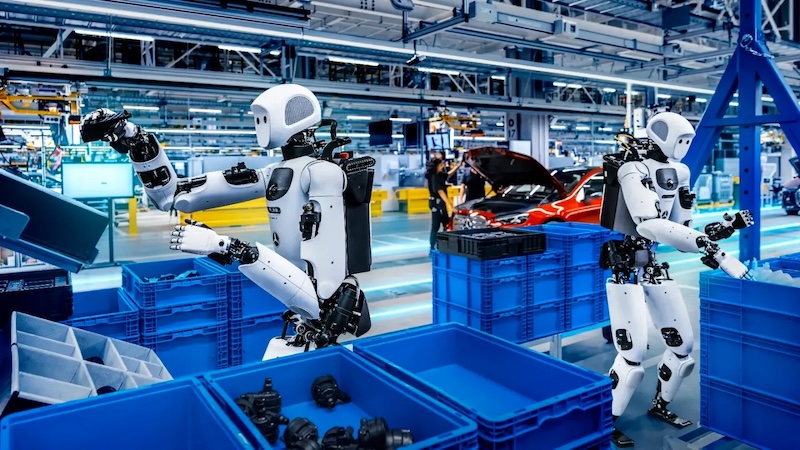
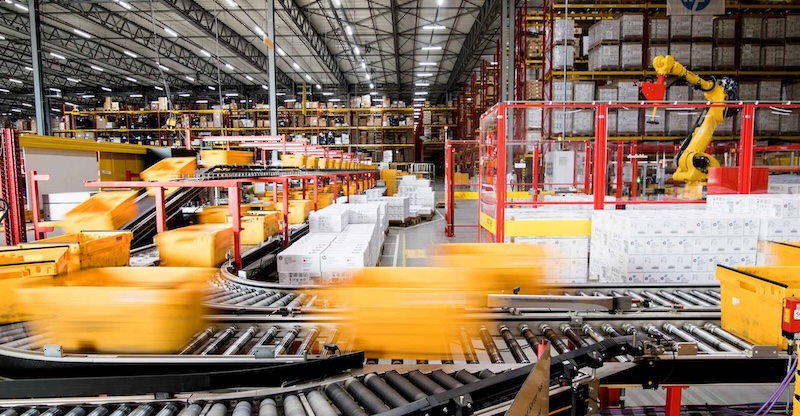
AWS drew lessons from Amazon's 1 million+ robot fulfillment operations, but the toolchain targets more variable environments. Examples include Telexistence's 300+ humanoid deployments in Japanese convenience stores and Bedrock Robotics' autonomous construction equipment — contexts where fault tolerance is lower and response requirements are higher than in controlled warehouses.
The platform is open source and available now. AWS and NVIDIA customers, including participants in the Physical AI Fellowship with MassRobotics, have already used individual components. The new release integrates them into a production-ready package.