Helm.ai announced $70M in signed commercial contracts for its foundation models, spanning automotive, mining, and construction deployments. The Redwood City company's customers include global OEMs and Tier 1 suppliers deploying perception systems from SAE Level 2 through Level 4 autonomy. CEO Vladislav Voroninski told The Robot Report the company is now on a path to profitability — unusual in a capital-intensive sector.
The company's approach centers on "deep teaching," an unsupervised learning methodology that separates perception from action. Instead of training end-to-end policies on millions of driving hours, Helm.ai trains models to understand physical environments first, then layer decision-making on top. This mirrors how humans learn — a teenager doesn't need to drive for years to predict pedestrian behavior. The result is a system that learns from a fraction of the data and generalizes to novel environments within real-world compute constraints.
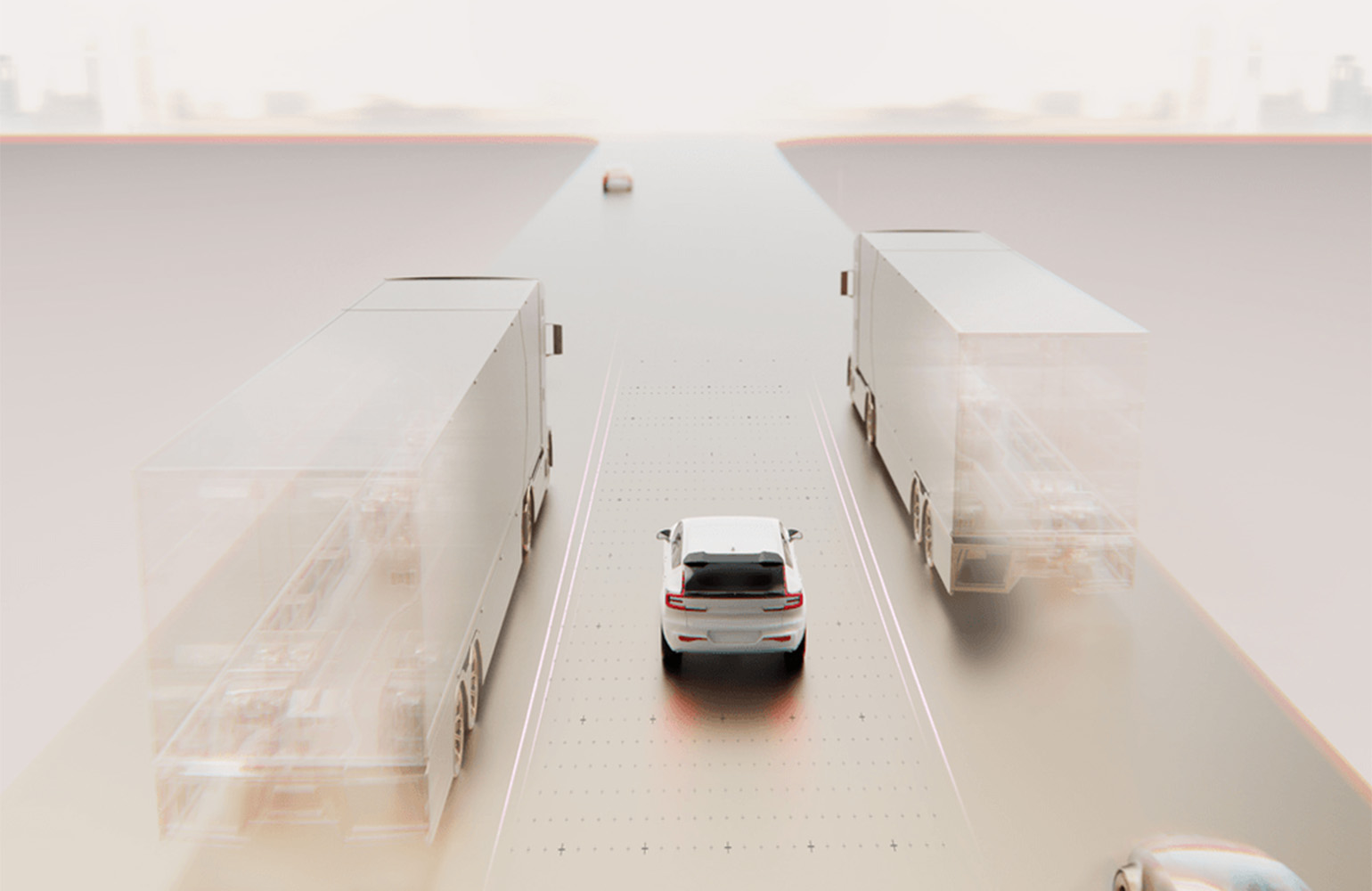
Automotive provides the foundation, but Helm.ai's models are environment-agnostic. The same perception stack handles city streets, open-pit mines, and construction sites. The company has also applied its technology to delivery drones. Voroninski frames robotics as "where autonomous driving was 10 years ago" — entering a breakout moment with minimal training data available. Data efficiency, he argues, is essential rather than advantageous in robotics.
The production traction across verticals validates a key bet: that perception can be decoupled from embodiment. Different robot form factors — vehicles, drones, humanoids — share the same core problem of sensor fusion and environmental understanding. Helm.ai's challenge now is proving that automotive-grade safety rigor translates to less regulated industrial contexts, and that foundation models trained broadly can ship reliably in narrow vertical applications.