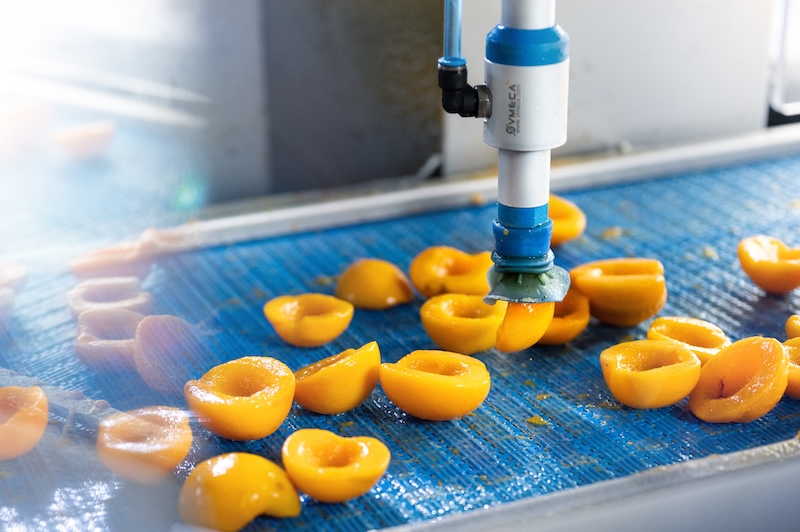
Agrophoenix processes 100,000 peaches per hour (200,000 halves) using eight parallel STAQ inspection cells developed by Dutch startup QING. Each cell contains a Stäubli TS2-80 SCARA robot in the HE (humid environment) variant, designed for food-grade operations. The robots pick defective peach halves at one per second after an AI vision system flags them for pit fragments or quality defects.
The technical challenge was not the robotics or AI — it was the gripper. Peeled peaches are slippery, and engineers spent two seasons iterating on vacuum gripper design and contact materials to reliably pick, transfer, and release fruit with cups inverted. QING's system uses AI to let operators train the vision model on what constitutes a defect, making it adaptable without reprogramming.
The HE robots run H1 food-grade oil and withstand cleaning every four hours during operation plus intensive weekly washdowns. Stäubli's EHEDG-compliant design allows this duty cycle without degrading performance — critical in continuous food processing where contamination risk and uptime are equally non-negotiable.
Agrophoenix is now working with QING to automate pit fragment removal, not just detection. If successful, it eliminates the current two-stage reject-and-repit workflow and pushes defect correction upstream in the line.
The broader signal: AI vision and collaborative robotics are moving into high-speed, low-margin food processing where manual labor has been the default. Gripper engineering remains the hard part.