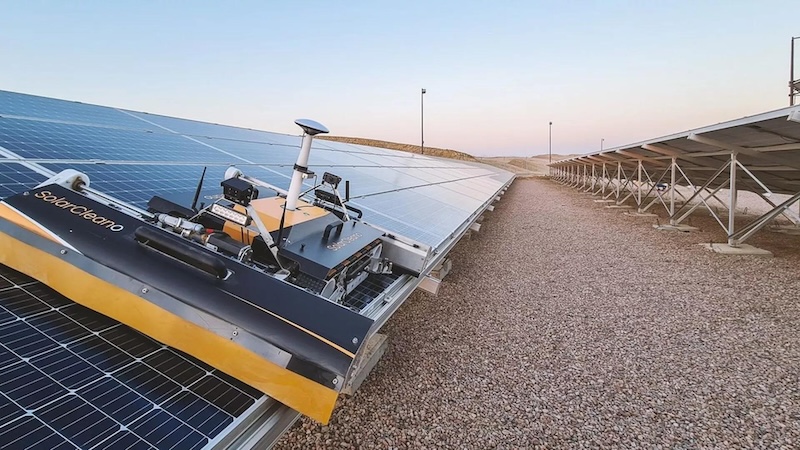
TALOS, funded through Horizon Europe, deployed autonomous maintenance systems at three solar installations: a 56 MW hybrid solar-wind facility in Spain, a 5 MW floating solar plant at Portugal's Alqueva reservoir, and an agrivoltaic pear orchard in the Netherlands. The platform combines production data, weather forecasts, and digital twin modeling to rank maintenance tasks by economic impact, then dispatches robots once human operators approve each mission.
The system demonstrated versatility across site types. At the Spanish sites, six machines including inspection drones, a ground vehicle, and a cleaning robot operated autonomously. At Alqueva, a rail-mounted cleaning robot and an uncrewed boat carrying an inspection drone serviced floating panels. The Netherlands deployment added agricultural monitoring, with a ground robot counting fruit and assessing tree health alongside solar inspection tasks.
TALOS reports operational gains: 90% reduction in human exposure to hazardous conditions, 70% shorter maintenance windows, 5% lower O&M costs, and up to 10% less production loss from downtime. These numbers position autonomous maintenance as economically viable for utility-scale solar, particularly as labor costs rise and plant sizes increase.
The project identifies regulatory fragmentation as the primary deployment barrier. Differing national rules on autonomous systems, unclear liability frameworks, and regulatory gaps around floating solar and agrivoltaics create compliance uncertainty that slows commercial adoption across Europe's solar fleet.