Neura Robotics launched Neuron AI, a multimodal foundation model that fuses 3D vision, touch, force, audio, robot state, and language into a unified action stream. Unlike vision-only systems, Neuron AI encodes multisensory data in a shared temporal space, enabling robots to act on information cameras alone cannot provide—such as confirming a lock has opened through sound and touch, or grasping objects outside the visual field.
The model introduces memory as a core architectural feature, giving robots object permanence and causal reasoning—capabilities humans develop in early childhood but that most robotic systems lack. This allows robots to track objects and action consequences over time without continuous visual confirmation, critical for physical tasks that unfold sequentially in occluded environments.
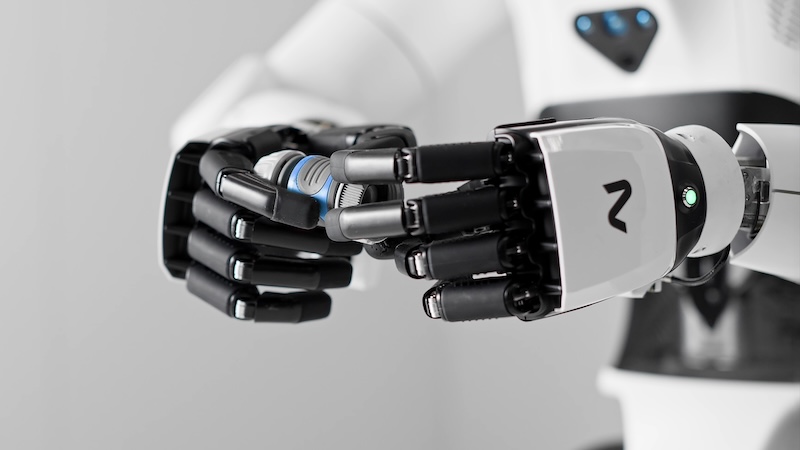
Neuron AI is trained on three data sources: real-world robot operations across Neura's training infrastructure, simulation-amplified task variations, and human demonstration data captured via sensor suits. The model supports five Neura robot embodiments with different end effectors, and is deployed via the Neuraverse platform, where customers can fine-tune it for proprietary tasks while optionally contributing anonymized data to improve future releases.
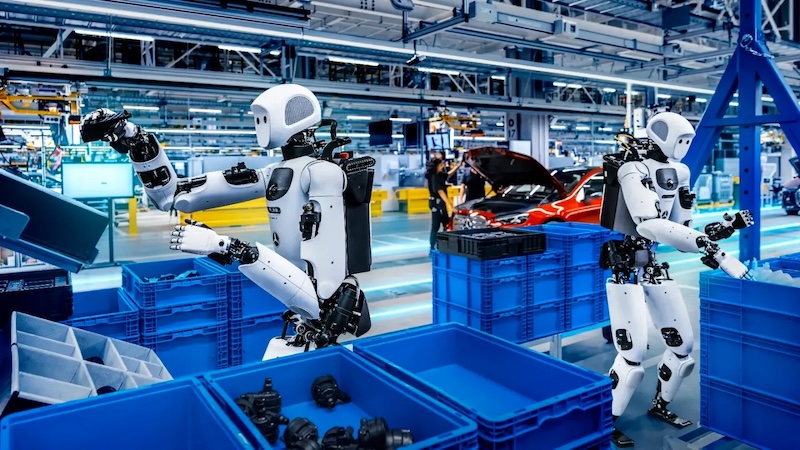
At Nvidia GTC Berlin (October 20-22), Neura will demonstrate its 4NE1 humanoid executing an eleven-minute autonomous laundry sequence—sorting, loading, closing, reopening, unloading, and transferring to a dryer—showcasing multisensory coordination and memory in a continuous task chain.
The model was developed in-house in Metzingen, Germany, with data partnerships from Schaeffler and Bosch. For industrial adopters, Neura positions Time-to-Skill—how quickly a robot learns and performs a new task—as the key performance metric, directly addressing deployment speed in manufacturing environments.