Dream Labs announced a $90M seed led by B Capital and Kindred Ventures, with participation from A.Capital, Unusual Ventures, SV Angel, Wing VC, and others. The funding will scale compute infrastructure as the company expands Dream-1's task and hardware support.
The company's Dream-1 model uses video prediction trained on human activities to infer what actions will accomplish a given task. It requires zero robot-specific training data to control new platforms with parallel grippers, a significant departure from imitation learning approaches that depend on large demonstration datasets per robot type. Dream Labs runs inference in distributed data centers and delivers low-latency responses via API.
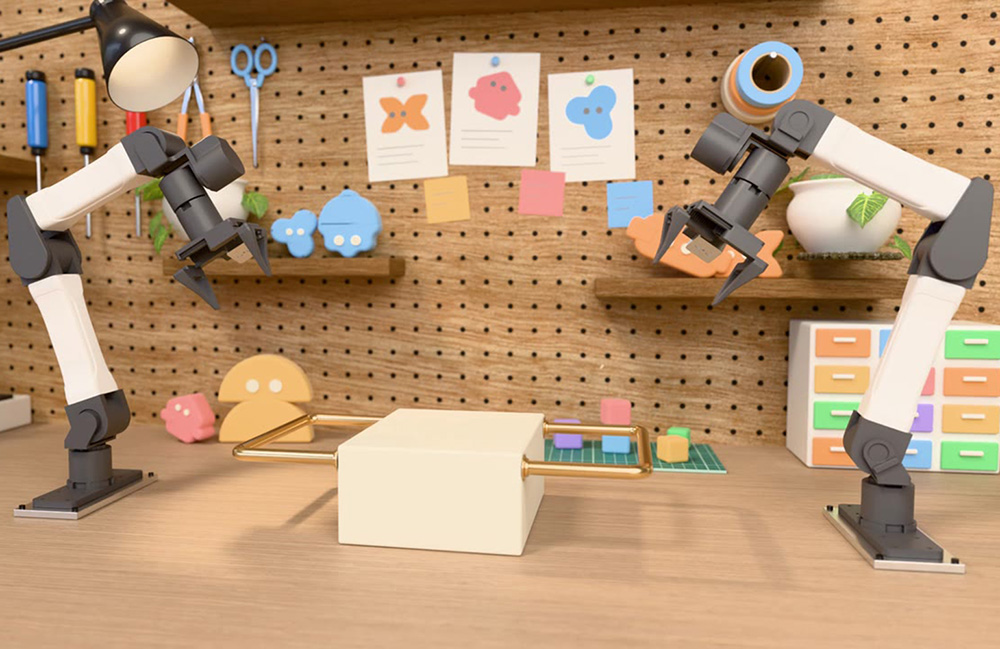
The model currently supports tabletop manipulation tasks — pick-and-place, object arrangement, laundry folding — on robots priced between $2,000 and $10,000. Dream Labs has over 20 hardware partners, including MakerMods, which sells $2,000 bimanual arms. Support for wheeled mobile platforms and dexterous hands is planned. The company also offers fine-tuning as a service for unsupported hardware or custom capabilities, delivering tailored models from small demonstration batches within hours.
Dream Labs' zero-shot claims rest on the assumption that video-based pretraining generalizes reliably to physical control tasks. Real-world performance under novel object geometries, lighting conditions, and failure modes will determine whether the approach scales beyond demonstration environments. Reliance on cloud inference introduces latency and connectivity dependencies that may limit deployment in disconnected or time-critical settings.
The availability of a public API and live robot playground lowers the barrier to experimentation, but also accelerates the timeline for competitors to benchmark and replicate the approach. Buyers should assess vendor lock-in risk and evaluate whether Dream Labs' abstraction layer becomes a control point in their robotics stack.