Eka Robotics closed a $150M Series A led by Andreessen Horowitz and F-Prime, with participation from Obvious Ventures, E14 Fund, MFV Partners, and several Fortune 500 strategics. The Cambridge-based startup was founded in 2024 and is targeting dexterous manipulation — the ability to handle varied objects and insertion tasks at industrial scale.
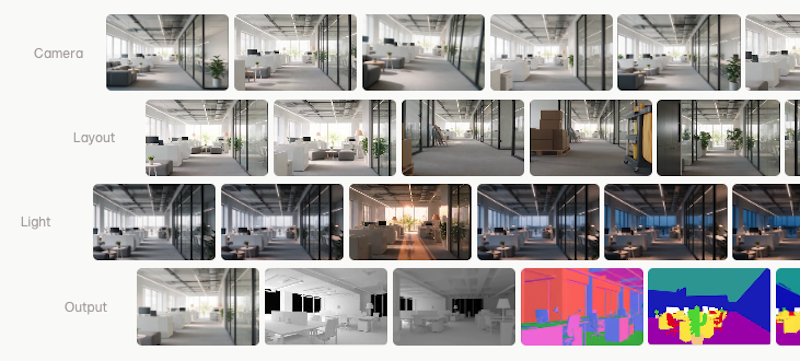
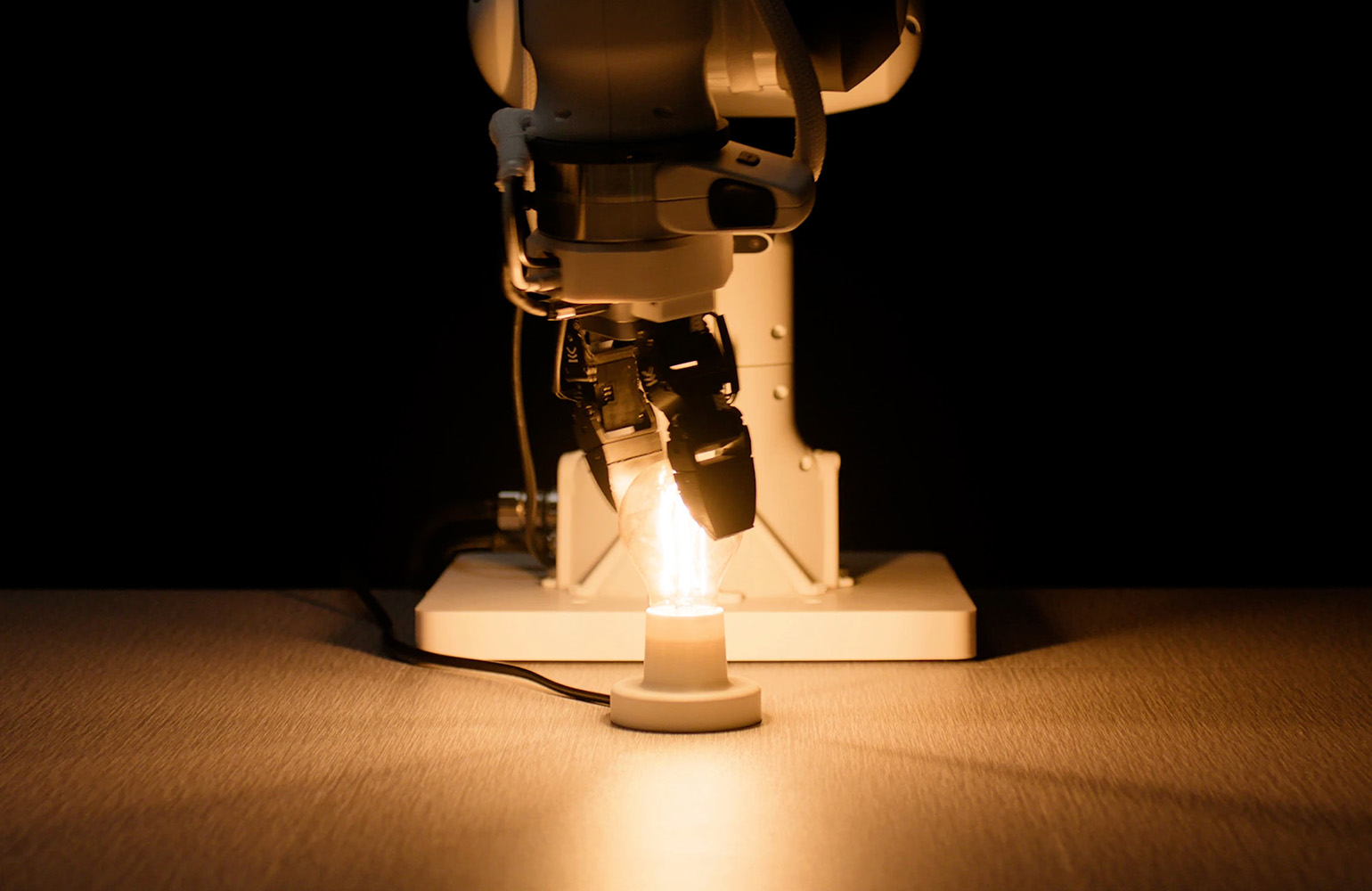
The company's vision-force-action model learns physics through reinforcement learning in simulation rather than imitating human teleoperation data. Eka generates thousands of hours of synthetic robot experience in minutes, varying objects, environments, and physical conditions. The model reasons jointly about vision and force, building what Eka describes as physical intuition. The company claims its robots achieve roughly 1,500 picks per hour across objects outside the training distribution and can perform tasks like screwing in light bulbs and wire insertion.
Dexterous manipulation remains a major barrier to general-purpose robotics deployment. Most current approaches rely on behavior cloning from human demonstrations, which struggles with novel objects and edge cases. Eka's bet is that sim-to-real transfer can now scale if the model learns physics principles rather than specific task sequences. If the claim holds in production environments, it would represent a significant capability leap over vision-language-action models trained on real-world teleoperation.
The round signals continued investor confidence in foundation models for robotics, but also reflects the market's impatience with lab demos. Investors are explicitly citing "success rate and speed over thousands of repetitions" as the commercial bar. Eka will need to prove the model generalizes in live deployments with minimal fine-tuning — a test that has tripped up several well-funded manipulation startups in the past 18 months.