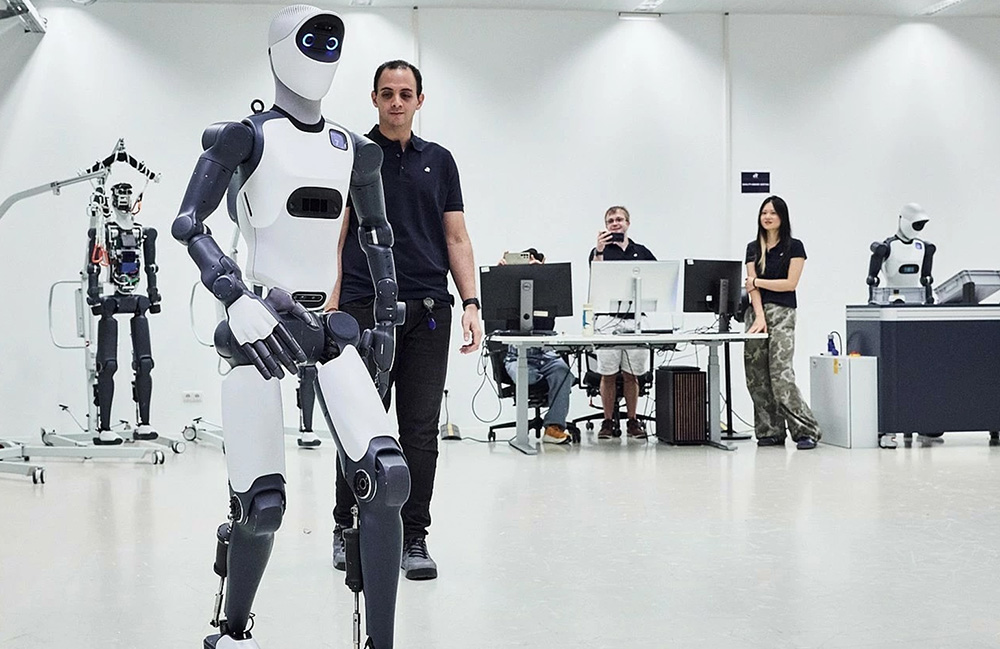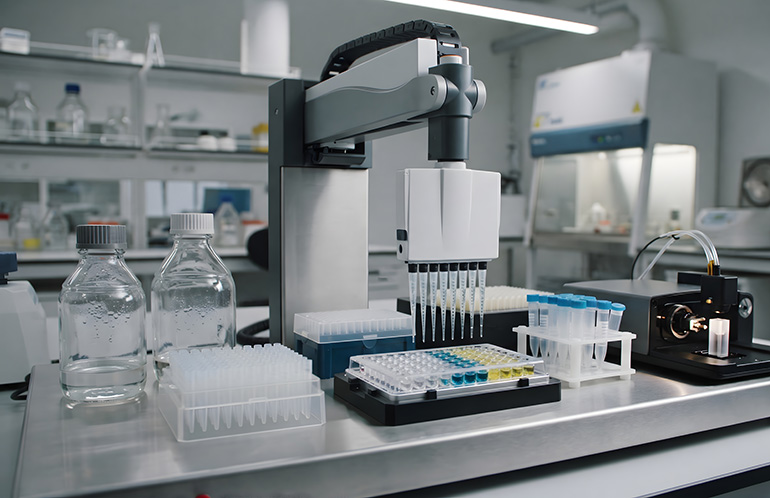
Warp Sciences has raised $215M led by Lightspeed to build what it calls sovereign biotech infrastructure — automated chemistry labs that serve pharmaceutical and biotech companies developing new drugs. The South San Francisco startup will operate as a contract research organization (CRO), synthesizing and testing molecular compounds while generating experimental data to train AI models that improve future experiments.
The technical approach combines human chemists with increasing levels of robotic automation. Initial services focus on lead optimization — making molecular variations that researchers compare when searching for drug candidates. The goal is to close the loop between experiment design, physical execution, and learning outcomes, creating systems that get smarter with each cycle.
The business model responds directly to geopolitical risk in pharmaceutical research. A 2024 industry survey found 74% of biotech companies contracted with Chinese firms for preclinical services. The BIOSECURE Act, signed in December 2025, restricts federal funding for designated foreign biotechnology entities. Warp is betting that demand exists for US-based chemistry services that match offshore speed and cost without IP exposure or compliance risk.
The founding team includes former OpenAI CPO Kevin Weil as CEO, former Meta AI VP Manohar Paluri as CTO, and medicinal chemistry veteran Solomon Reisberg as CSO. Early technical hires come from Genesis, Skild AI, 1X Technologies, Genentech, and Lawrence Livermore National Labs. Angel investors include leaders from Anthropic, Tesla Robotics, Databricks, and Physical Intelligence.
Warp has no proprietary drug pipeline. It positions itself as infrastructure — the labs, robotics, and AI that enable customer-led drug discovery programs to move faster while keeping sensitive research onshore.