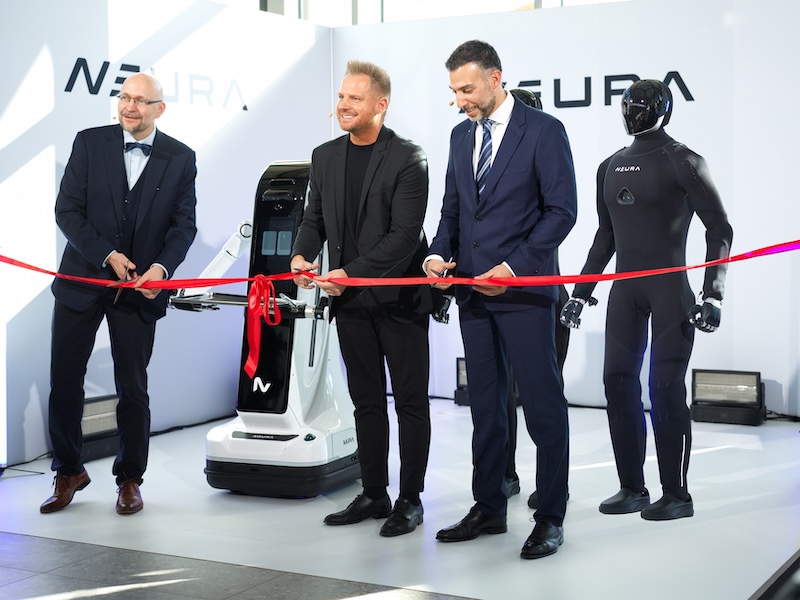
Neura Robotics and TUM's Munich Institute of Robotics and Machine Intelligence (MIRMI) launched the TUM RoboGym, a 2,300-square-meter facility combining robotics research, training, and industrial applications. Companies from automotive, pharmaceuticals, logistics, agriculture, and healthcare sectors are already involved, training robots to handle cardboard boxes, fill bottles, and load wooden components.
The facility uses three data collection methods: real-world robot operation, human demonstrations via sensor-equipped data suits and motion capture, and simulation. Neura's Neuraverse platform connects the training infrastructure to the company's AI tools, feeding data into Neuron AI — Neura's Perception-Language-Action foundation model.
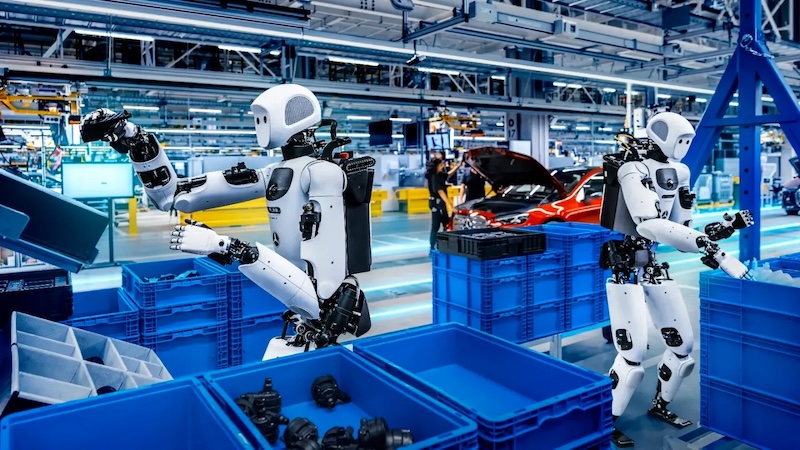
Neura also introduced 4NE1 Gen 4, the latest version of its humanoid. The new model is 20 percent lighter, features sensorized textile skin, more advanced hands, and "Smart Limbs" that respond independently to their surroundings. It runs Neuron AI, which translates vision, touch, force, and sound inputs into movement. The robot is being prepared for series production.
The initiative is framed explicitly as a strategic move in "geopolitically uncertain times" — positioning Germany as a training hub for Physical AI systems developed and built domestically. Neura is investing approximately €11 million of the total €17 million budget. The Munich facility is the first in a planned international network, with additional locations planned in the US, China, and Germany (RWTH Aachen).
The three-year partnership gives industrial companies access to advanced training infrastructure while allowing them to retain control over proprietary workflows and manufacturing knowledge. This addresses a growing concern among European manufacturers about data sovereignty and IP protection in AI training pipelines.