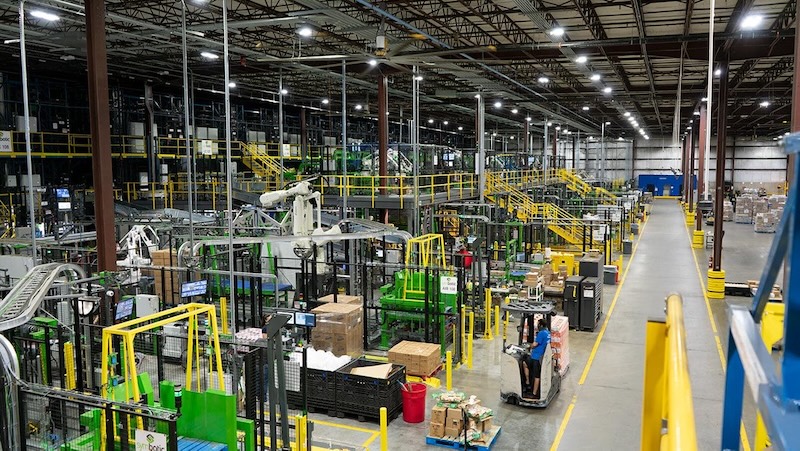
Walmart announced a $6 billion multi-year agreement with Symbotic to deploy AI-driven warehouse automation across 25 US regional distribution centers. The contract covers Symbotic's full technology stack: BreakPack each-picking robots, SymMicro micro-fulfillment systems, and proprietary AI software that orchestrates case movement through the supply chain.
The deployment targets upstream e-commerce inventory management, increased storage density, and faster product flow through Walmart's distribution network. Symbotic's systems use computer vision and AI to optimize pick-and-place operations, reducing manual handling and improving replenishment speed for both store and online orders.
This deal solidifies Symbotic's position as Walmart's dominant automation vendor. The partnership began over a decade ago with a single product and has expanded as Walmart invests in supply chain capacity to support omnichannel fulfillment. Competitors like Dematic and AutoStore serve adjacent segments, but Symbotic now controls a significant share of Walmart's physical infrastructure.
The scale of this commitment raises questions about vendor concentration risk. A $6B spend locks Walmart into Symbotic's technology roadmap for years, limiting flexibility if next-generation systems from rivals offer superior performance. For other retailers evaluating warehouse automation, Walmart's bet on Symbotic becomes a market signal — but not necessarily a template.