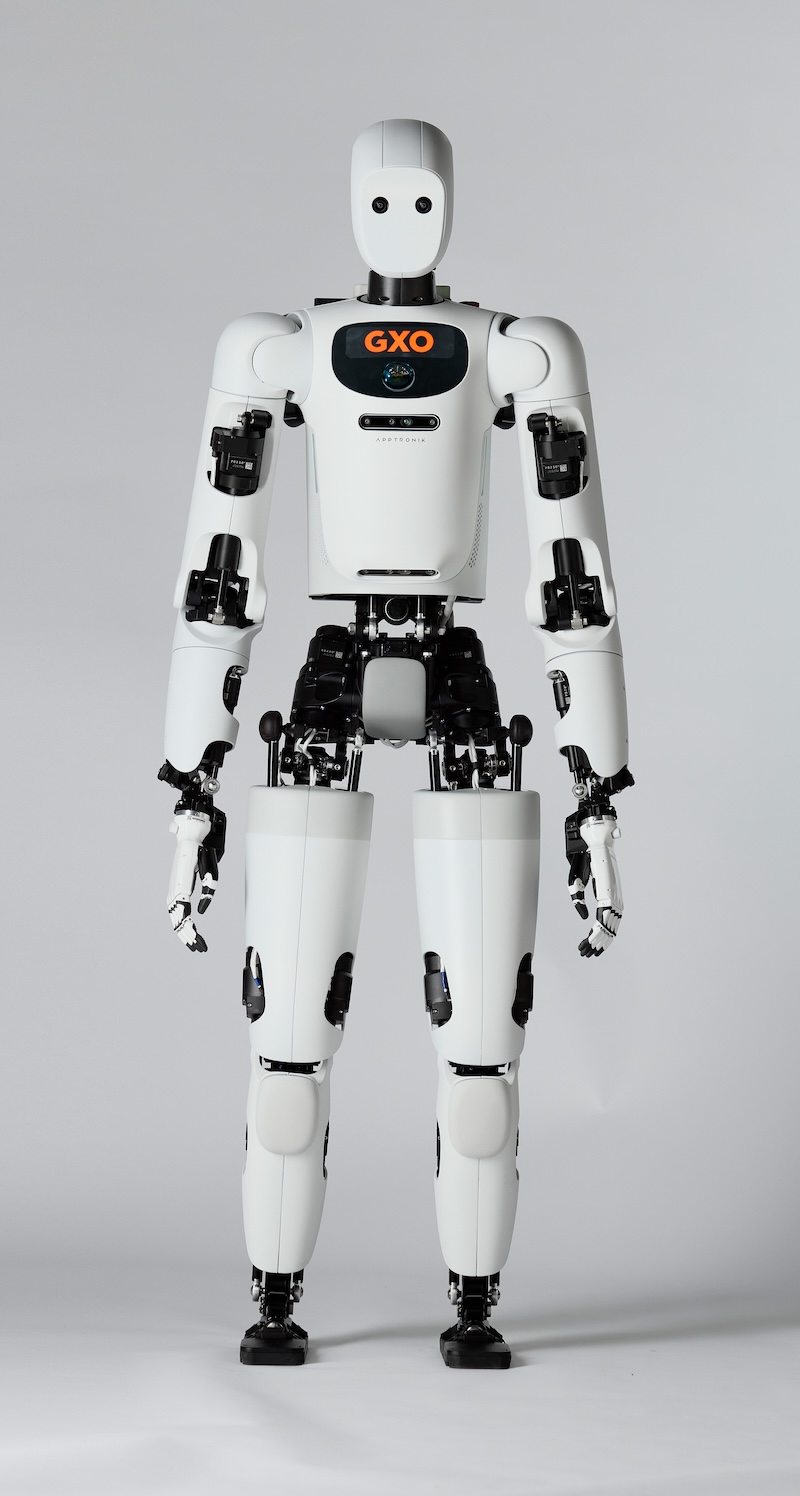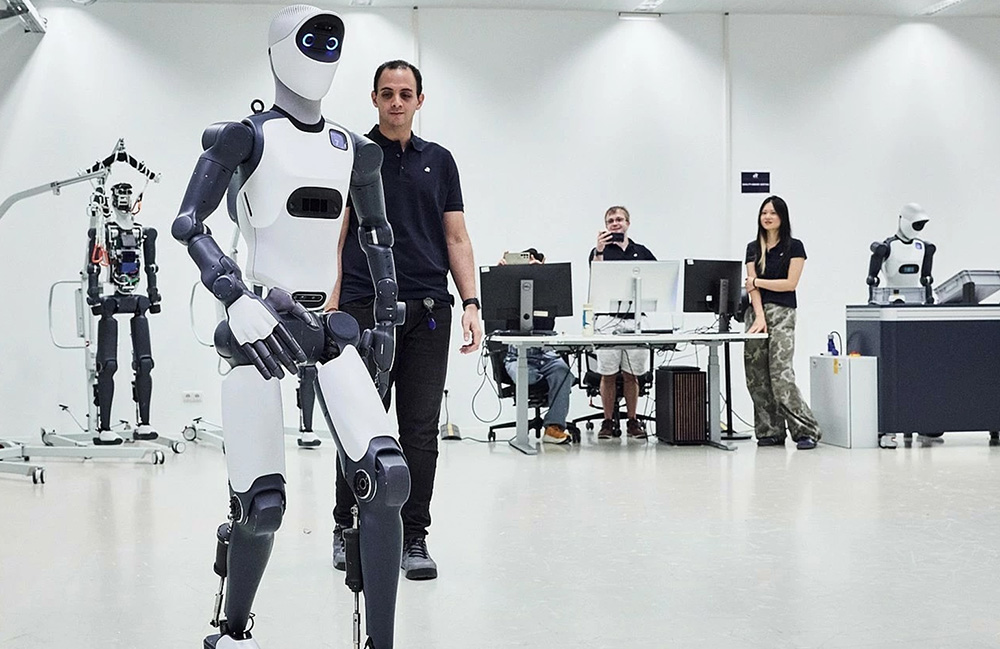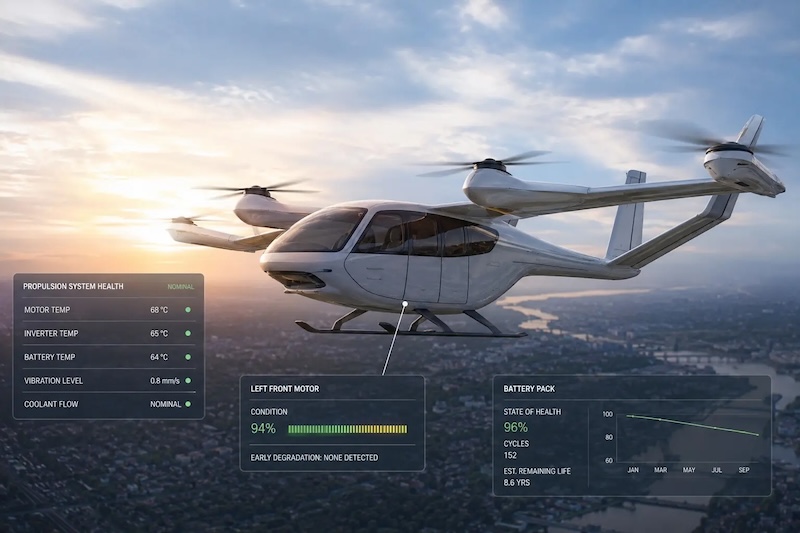
AstraQua's $1,274,990 NASA Phase II contract advances AstraSense, a predictive health and operational awareness system for autonomous aircraft. The technology runs on robotic hardware and provides real-time diagnostics — enabling machines to use their own condition data to decide whether to continue, adapt, or abort a task. Phase I demonstrated these capabilities to NASA. Phase II focuses on aircraft integration, health-informed reasoning, and safety-critical validation.
The core innovation is what AstraQua calls "teaching robots to feel pain" — using onboard health data to inform operational decisions without requiring continuous cloud connectivity. In multi-robot scenarios, machines can share health status across the team. If one unit degrades, others can redistribute unfinished tasks while maintaining mission continuity. The approach emphasizes low-power edge intelligence and collaborative decision-making across heterogeneous robot teams.
The electric and hybrid-electric aircraft market is a key target. As autonomous aerial systems increasingly operate over populated areas, the ability to self-assess airworthiness in real time becomes a safety prerequisite. Current autonomous systems rely heavily on external monitoring and reactive fault handling. AstraSense shifts the model to proactive, onboard health reasoning.
AstraQua founder Loay Elbasyouni led electrical and power electronics for NASA's Ingenuity Mars Helicopter and later worked on rocket-engine avionics at Blue Origin. The company's broader platform — the Adaptive Quorum Foundation Model — is designed to integrate perception, reasoning, and collaboration across different robot types, with health awareness as a foundational layer.