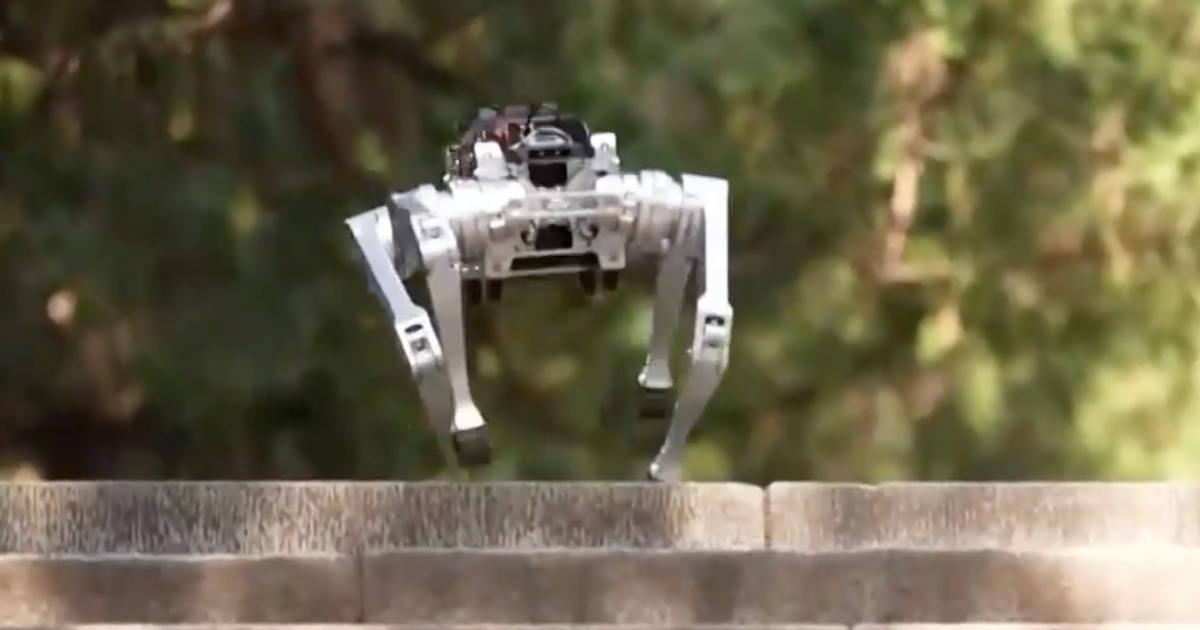
On November 2, robot dogs and humanoid robots climbed Mount Taishan's 3,100-step route from Hongmen to Zhongtianmen — a 3.9 km course with 600m elevation that takes human hikers 1-2 hours. Beijing's Lingyi Technology, a Unitree Robotics subsidiary, won with a time of 43 minutes 41 seconds. A rival team from UNIUBI AI clocked 35 minutes 47 seconds in trial runs using its Cyvet robot equipped with LiDAR and real-time 3D mapping.
The centuries-old stone steps presented the core technical challenge. Steps varied in height, width, and spacing — forcing robots to continuously recalibrate gait and balance. This tests the same real-time terrain adaptation that will be required for disaster response, factory operations, and navigating human-built environments where flat surfaces are the exception.
China's Ministry of Industry and Information Technology reported over 400 humanoid models in production and 40,000+ units shipped in H1 2026. The competition serves as a visible benchmark for investors and manufacturers tracking which platforms can handle real-world complexity beyond controlled lab conditions.
The event included four categories: speed climbing, load-carrying, exoskeleton-assisted climbing, and all-terrain scouting. Balance on uneven surfaces remains the primary engineering bottleneck for taller bipedal humanoids. Quadrupeds demonstrated more stability but still required multiple pause-and-recalculate cycles on irregular steps.