TLD Robotics launched in September following ALVEST's acquisition of EasyMile, consolidating nearly a decade of collaboration between TLD and the autonomous software developer. The new entity combines EasyMile's autonomous driving stack, TLD's vehicle manufacturing, and TractEasy's operational deployment experience under one organization. CEO Richard Reno stated the business had scaled 10x since TractEasy's formation three years ago, with ambitions to scale another 10x.
The operational footprint is substantial. TLD Robotics reports over 50,000 autonomous missions completed across more than 35 sites in 10 countries, including 15 airport operations and 20 industrial installations. Some facilities run 24/7 autonomous towing and cargo transport, providing real-world operational data beyond controlled pilot programs. Customers include dnata, BMW, Daimler Truck, Bosch, Munich Airport, Narita Airport, and Lufthansa Cargo.
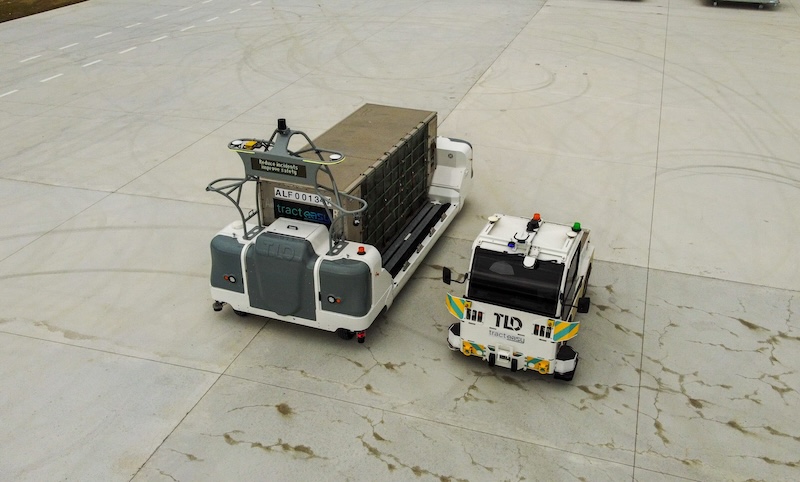
The consolidation tackles a practical problem in industrial autonomy: multi-vendor integration complexity. Typical deployments require separate suppliers for the vehicle platform, autonomous software, fleet management, and maintenance. TLD Robotics now controls the full stack — onboard perception and navigation software, fleet supervision systems, purpose-built autonomous tractors, and global manufacturing via TLD's 12 factories across seven countries.
ALVEST's strategy centers on long-term industrial support rather than technology demonstrations. Airport and industrial autonomous vehicles are capital equipment expected to operate for years, requiring sustained software updates, parts availability, and service. By placing TLD Robotics within an established industrial group, ALVEST aims to provide operational continuity that standalone software developers or joint ventures often struggle to guarantee.
The move signals a broader shift in autonomous vehicle commercialization. While public attention focuses on robotaxis, airports and logistics facilities offer structured environments with defined routes, managed traffic, and lower speeds — conditions that reduce autonomous driving complexity. Labor availability, operational consistency, and electrification pressures are accelerating adoption in these settings.