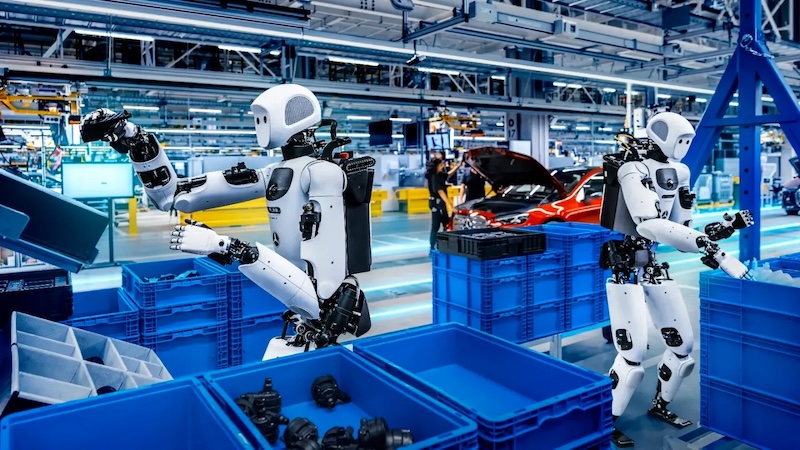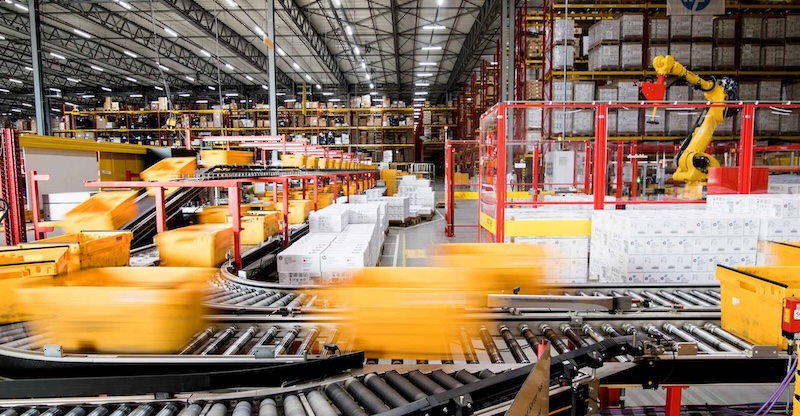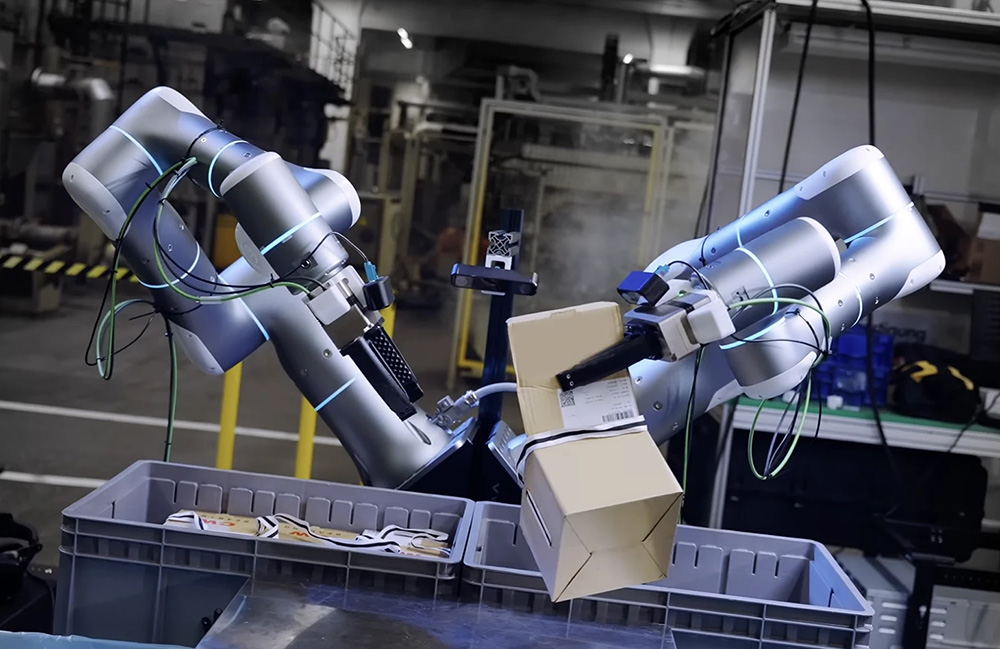
Rhoda AI announced $450M in Series A funding after 18 months in stealth, targeting deployments in automotive, manufacturing, logistics, and e-commerce. The company's DVA model predicts future video frames from observation history, then converts those predictions into robot actions—a closed-loop system that executes in half-second intervals.
The technical bet is pretraining scale. Rhoda trains on what CEO Jagdeep Singh describes as "hundreds of years of videos"—not just human manipulation footage, but sports, nature, and any video that demonstrates physics. The company found that broader datasets outperformed curated human-centric training data. After pretraining, the model requires only 10-20 hours of task-specific fine-tuning, similar to onboarding a factory worker.
This contrasts with the teleoperation approach that produced lab demos of shirt-folding robots but failed to generalize. Singh claims "the number of autonomous manipulation capable robots solving real world problems today is effectively zero." Rhoda's model is embodiment-agnostic during pretraining—the specific robot hardware only matters during post-training.
The company operates as a full-stack provider, owning the AI layer while offering flexibility on hardware and skill training. Internal development focuses on manufacturing and logistics, where labor shortages and offshoring economics create immediate demand.