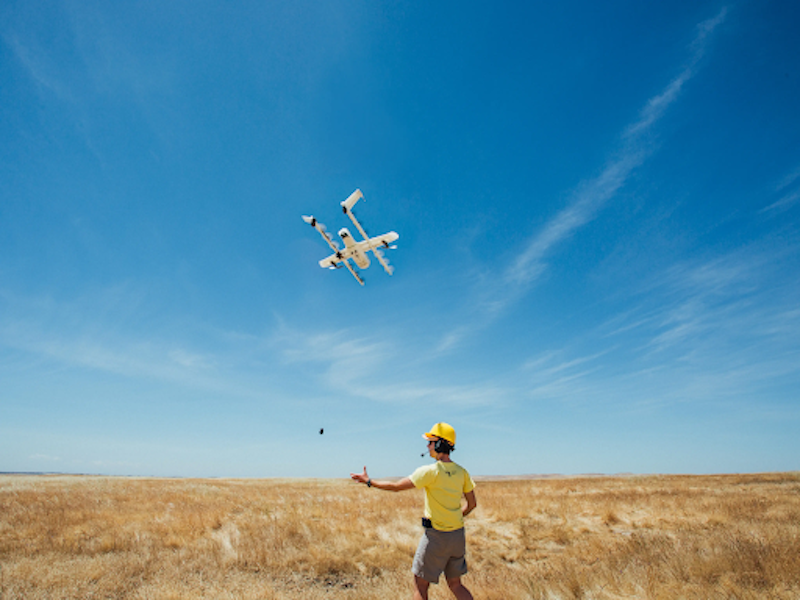
Wing announced a $125 million investment in US manufacturing to support expansion of its autonomous delivery network. The centerpiece is a Fort Worth, Texas facility capable of producing tens of thousands of drones annually, creating up to 100 manufacturing jobs. The capital will also fund R&D operations in California and at existing delivery sites.
The investment is timed to align with pending BVLOS regulations from US aviation authorities. Current Part 135 Air Carrier rules require visual line of sight operations — a constraint that limits scalability in dense urban environments. Wing holds the first Part 135 certificate issued for drone operations (2019) and operates over 70 sites nationwide, completing one million residential deliveries in 2026 alone.
Wing's aircraft use autonomous navigation systems designed for residential delivery — a technically harder problem than fixed depot-to-depot routes. The company has handled thousands of daily deliveries in metro areas, demonstrating commercial viability at a scale competitors have yet to match. The Fort Worth facility signals a shift from experimental deployment to industrial-scale production.
The expansion reflects broader momentum in autonomous aerial logistics. Regulatory clarity on BVLOS operations would unlock new markets for Wing and rivals, but also raises questions about airspace coordination, noise abatement, and emergency response protocols in congested urban areas. Operators will need to demonstrate safety performance at scale before regulators expand permissions.
Wing's plan to reach 40 million Americans by 2027 depends on regulatory pace and local acceptance. Manufacturing capacity is no longer the bottleneck — airspace access is.