Katze initially targeted Magic Leap One XR headsets after the company disabled activation servers, rendering functional hardware unusable. By analyzing NVIDIA's open-source Fastboot implementation, she discovered two vulnerabilities: "sparsehax" in SparseFS image unpacking and "dtbhax" in kernel device tree loading.
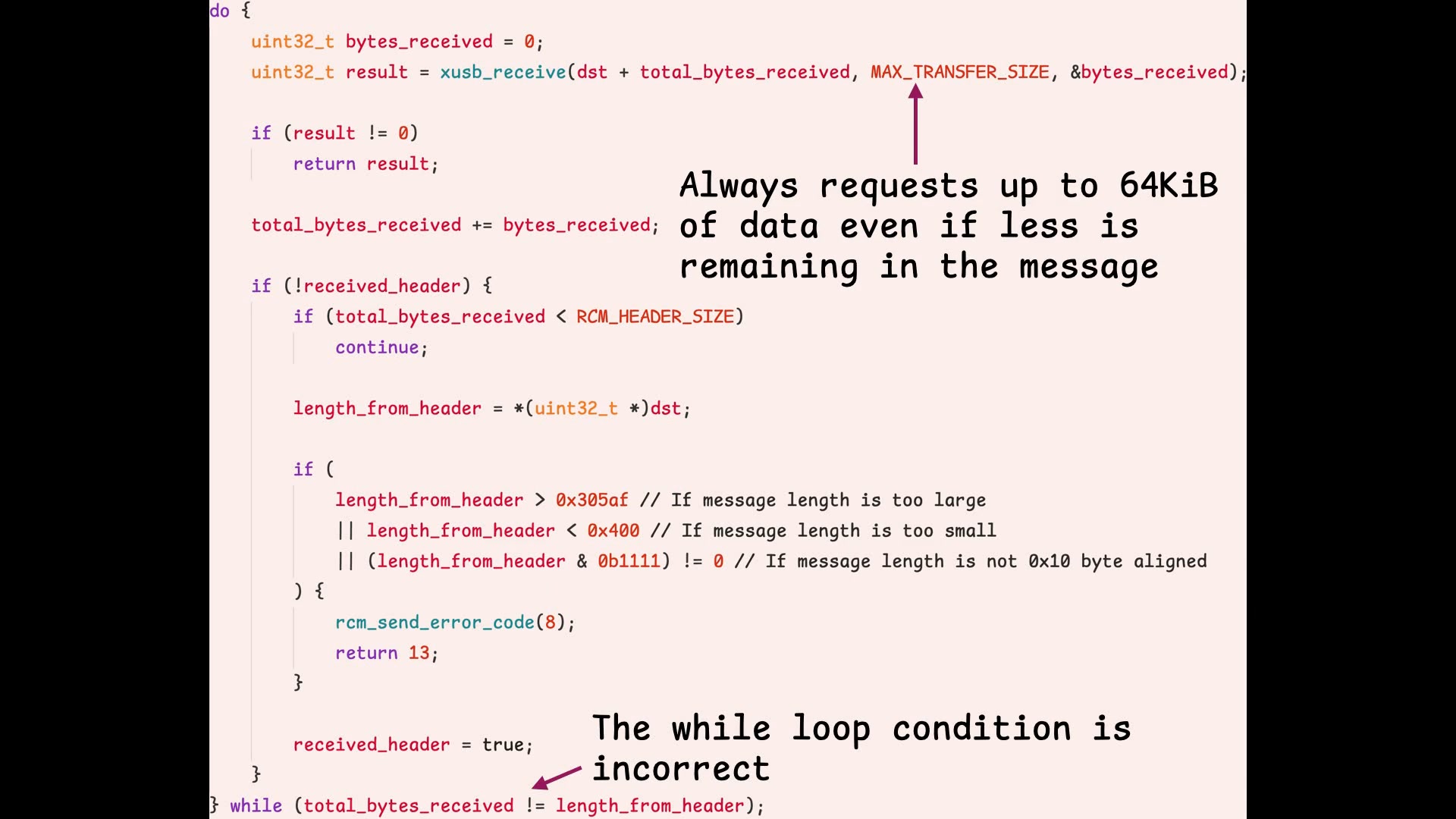
The most significant finding came from fault injection attacks that dumped the Tegra X2 BootROM. Katze identified a vulnerability in USB recovery mode that grants code execution at the highest privilege level. Exploiting it required novel techniques due to memory access limitations from the USB controller's perspective.
The vulnerability is hardware-level and unpatchable. Any device using Tegra X2 — including Tesla Autopilot 2 and 2.5 systems — remains permanently vulnerable. Katze demonstrated the exploit working on Tesla hardware during the talk.
This represents a supply chain risk for autonomous vehicle operators. While physical access is required, the attack surface includes service centers, used vehicle sales, and any scenario where an attacker gains USB access to the Autopilot computer. Tesla cannot patch the BootROM via OTA update.