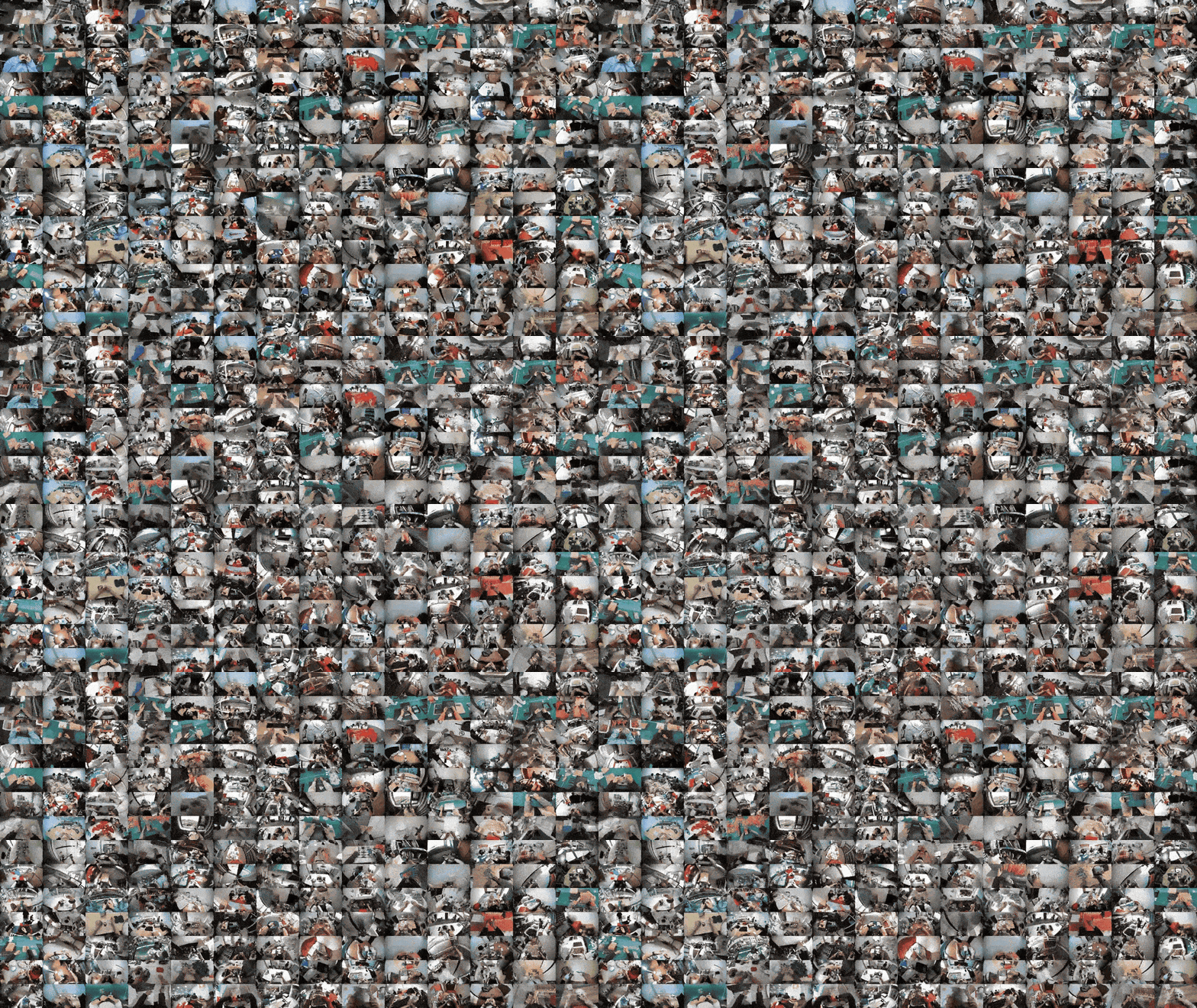
LiberAI, founded in December 2025, has launched Liber-0, a foundation model designed to transfer human manipulation experience to general-purpose robots. The system addresses a core robotics challenge: traditional robot training requires extensive robot-specific demonstrations, which are expensive and slow to collect. Liber-0 instead learns from 2.2 million hours of human video, glove-recorded hand motions, and smaller amounts of robot teleoperation data.
The technical approach uses lightweight data gloves that record hand poses and trajectories while cameras capture first-person and wrist-mounted views mimicking robot perspectives. This provides richer training data than video alone, capturing not just what happens visually but the precise physical movements behind it. Human demonstrations become scalable training data — no robot required during collection.
In validation tests, a policy trained on 25 percent of robot demonstrations plus 100 percent of glove data achieved a 75.6 progress score, outperforming a policy trained on 100 percent robot-only data (72.8 score). When robot training covered only pick-and-place tasks, adding human glove data for other manipulation types increased the progress score from 2.2 to 54.6, approaching the 56.3 reference benchmark. This suggests human experience can both supplement and broaden robotic capabilities beyond what robot-specific data alone provides.
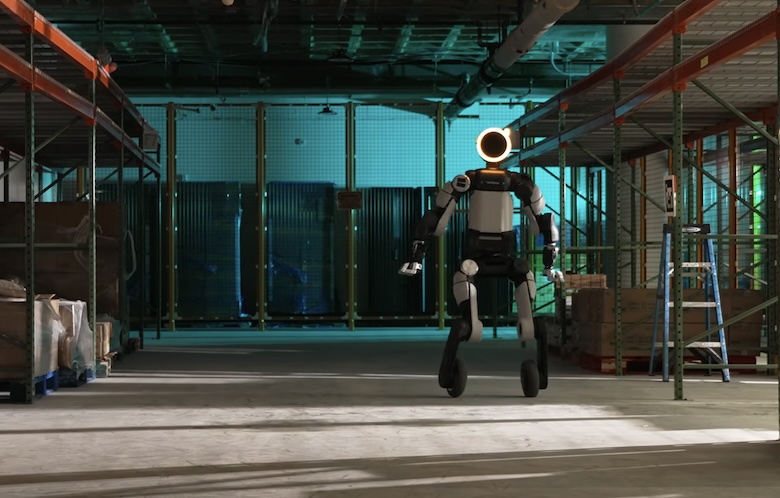
LiberAI's LEO robot is designed with dexterous hands, articulated wrists, and human-aligned camera positions to reduce the embodiment gap. In comparative testing using identical glove data and equal teleoperation volumes, LEO scored 90.4 average across three manipulation tasks versus 62.1 for a less human-aligned platform (Tianji). The model uses a Unified Embodiment Representation that accounts for physical differences between human bodies and robot configurations, learning underlying behaviors rather than assuming identical execution.
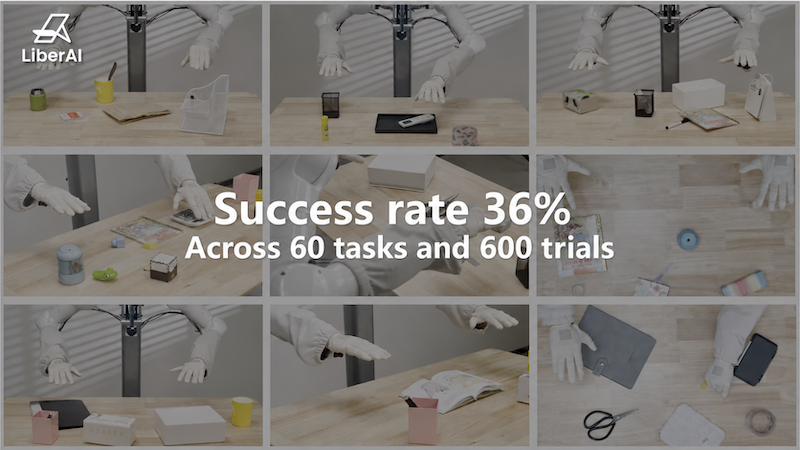
Liber-0 represents an attempt to build a foundation model for physical action comparable to large language models for text. The training progresses through stages: broad visual prediction from diverse human video, action prediction combining video with motion data from gloves and robots, and manipulation-focused training emphasizing precise sustained interaction. LiberAI is exploring zero-shot manipulation — tasks the model hasn't been explicitly trained on with robot demonstrations.